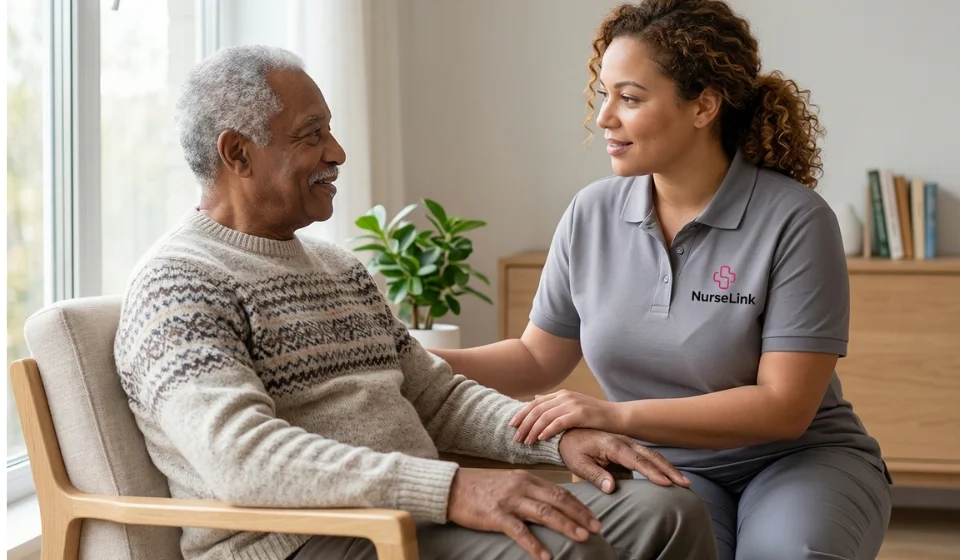
The Nurse Who Became The Patient
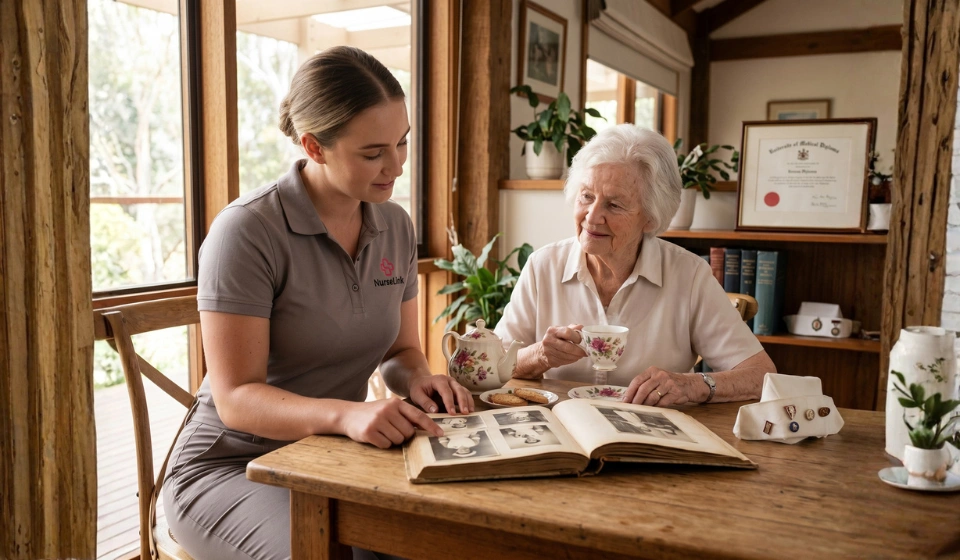
How NurseLink Supported A Retired Nurse With Parkinson's Disease
A Case Study In Sensitive, Dignity-Led Homecare For A Woman Who Spent Her Life On The Other Side Of It
Introduction
There is a particular kind of difficulty that comes with needing care when you have spent your life giving it. A nurse who has managed wards, administered medications, assessed patients and advocated for the dignity of others in their most vulnerable moments does not become a different person when illness arrives at her own door. She is still the professional who knows what good care looks like. She is still the person who understands exactly what is happening to her body and what the progression of her condition is likely to mean. And she is still, beneath all of that clinical knowledge, a person who has always been the one doing the caring, not the one receiving it.
Parkinson’s disease does not care about any of this. It arrives with its own timeline and its own demands, progressive, unpredictable and deeply personal in how it affects the daily reality of the person living with it. For a woman who has built her identity around independence, clinical competence and the capacity to manage whatever comes her way, the incremental losses that Parkinson’s imposes can feel like an assault not just on her body but on who she understands herself to be.
Homecare for a person like this requires something beyond clinical skill, though clinical skill is essential. It requires the particular kind of professional respect that one clinician extends to another, the willingness to follow the lead of a person who knows more about healthcare than most of the people who will ever come through her door, and the patience to earn trust from someone who knows exactly what corners can be cut and will not accept it if they are.
At NurseLink Healthcare, we understand that the person receiving care is always the expert on their own life, and when that person is also an expert on care itself, that understanding has to be applied with particular care and particular humility. This case study documents how our team supported a retired nurse in her seventies in Hobart, Tasmania, living with Parkinson’s disease, through the process of accepting and then genuinely valuing homecare support, after months of managing alone in ways that her condition no longer safely permitted.
To protect the privacy of the client and her family, all names and identifying details have been kept confidential throughout this case study.
The Client & His Situation
The client is a woman in her mid-seventies who spent over four decades working as a registered nurse in Hobart, including many years in acute medical and surgical wards and a final decade in clinical education, training the next generation of nurses at a Tasmanian hospital she had been part of for most of her career. She had retired several years before the events of this case study, reluctantly and on her own terms, and had filled her retirement with the same purposeful energy that had characterised her working life. A large garden, a wide circle of friends, an ongoing involvement with a local community health advisory group and the particular satisfaction of a person who has always known how to be useful.
Her Parkinson’s diagnosis had come three years before she was referred to NurseLink Healthcare, and the progression of her symptoms over that period had been gradual but steady. Tremor in her dominant hand had been the first sign, followed by changes in her gait and balance that she had initially managed with the practical resourcefulness of someone who knows how to adapt. Medication had helped, and continued to help, but the nature of Parkinson’s is that adaptation is a process without an end point, and the adjustments required had grown in number and in significance as the months had passed.
By the time her GP raised the question of homecare support, she was managing falls risk that her own clinical judgment told her was real but that she had not been willing to formally acknowledge. She had stopped telling her daughter, who lived in mainland Australia and visited when she could, the full picture of how her days were going. She had modified her garden to reduce the tasks she could no longer manage safely, without telling anyone she had done so. And she had begun, on some days, to spend more time in her chair than was good for her, not from choice but from the particular fatigue that Parkinson’s imposes and that she was managing alone.
Her GP had known her for years and had learned how to have direct conversations with her. The homecare conversation had not been easy, but it had been honest, and she had not dismissed it. She had said she would think about it, which her GP knew, from experience, was as close to yes as she was likely to get on the first attempt.
The Referral & What It Revealed
The referral to NurseLink Healthcare came through her GP, accompanied by a clinical summary and a personal note that the care coordinator found both helpful and illuminating. The note described a patient with significant clinical knowledge, strong views about the standard of care she would and would not accept, a tendency to assess the competence of anyone who came through her door within approximately the first three minutes of meeting them and a deep, if currently suppressed, understanding that she needed more support than she was allowing herself to receive.
The care coordinator who took the referral understood immediately that the initial assessment conversation was going to be unlike most. She was not going to be meeting a patient who needed to be educated about her condition or guided toward an understanding of what care might look like. She was going to be meeting a clinician, retired in name but not in professional identity, who would be evaluating NurseLink Healthcare as much as NurseLink Healthcare was assessing her.
The assessment visit was approached accordingly.
Understanding What She Actually Needed
The initial conversation was, by the care coordinator’s account, one of the more demanding and ultimately one of the more rewarding assessment visits she had conducted. She asked sharp questions. She identified gaps in the standard assessment framework that she found incomplete or poorly designed and said so. She was not difficult for the sake of it. She was a person applying the standards she had held throughout a long clinical career to a situation she was being asked to trust.
What emerged, over an extended and genuinely engaged conversation, was a picture of what she actually needed and, more revealingly, what she was afraid of. She needed help with the morning routine that Parkinson’s had made both more complex and more risky than it had once been. She needed someone who could be present during the periods of the day when her medication had worn thin and her symptoms were at their most pronounced. She needed falls risk management that was built into her daily environment and her daily routine without making her feel that her home had become a clinical facility.
What she was afraid of was becoming a patient in the dismissive sense of the word, a person managed rather than respected, spoken to in the particular tone she had watched less skilled colleagues use with elderly patients throughout her career and that she had always found both clinically counterproductive and humanly unacceptable. She was afraid of losing the last of her independence to a support arrangement that treated her dependency as the whole story of who she was.
She was also, beneath a considerable amount of professional composure, afraid of how much help she actually needed and of what it meant that she needed it. That fear was not something she named directly. But it was present in the conversation in ways that the care coordinator recognised and noted without drawing attention to them.
The care plan NurseLink Healthcare developed was built around everything she had said and some of what she had not.
The NurseLink Healthcare Solution
A Support Worker Who Could Meet Her As A Peer
The selection of the right support worker for this engagement was the most critical single decision NurseLink Healthcare made. She needed someone whose clinical competence she would respect, whose manner she would not find condescending and who could engage with her as one professional to another without either performing deference or ignoring her expertise. This was a narrow set of requirements, and finding the right person required deliberate identification rather than standard assignment.
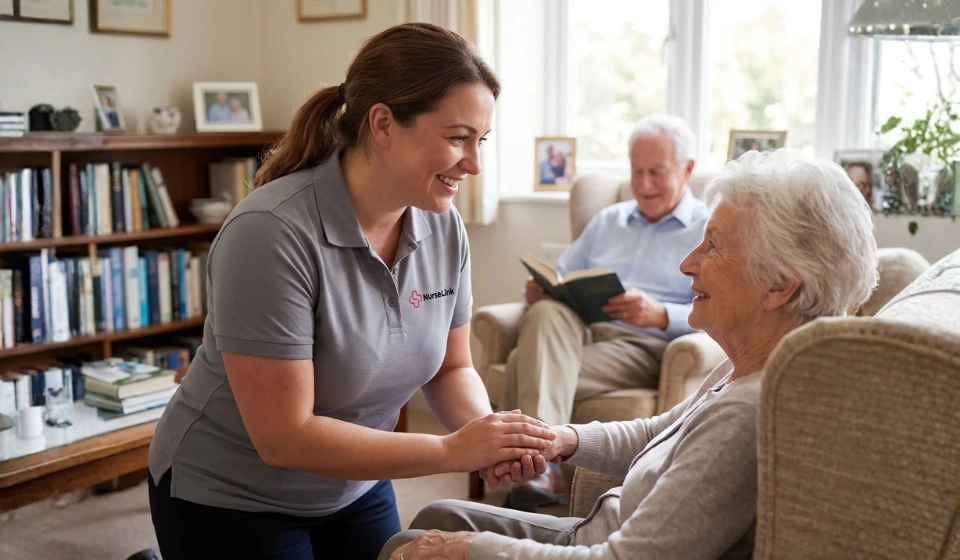
NurseLink Healthcare identified a registered nurse with significant medical ward experience and a personal manner that the care coordinator assessed as well matched to what was needed. She was experienced enough to be confident in her own clinical judgment, grounded enough not to be threatened by a client who would occasionally know more than she did about a specific aspect of Parkinson’s management and warm enough to build a genuine human relationship with a woman who needed the clinical relationship to become something more than clinical before she would fully accept the support being offered.
The introductory visit was arranged as a conversation between two nurses rather than an assessment of a patient, a framing that the care coordinator established explicitly at the outset. It made a difference. She engaged differently when she was not positioned as the person being assessed, and the connection that formed in that first visit was the foundation on which everything that followed was built.
Care That Followed Her Clinical Lead
The care plan was structured around her clinical knowledge of her own condition and her clearly expressed preferences about how her care should be delivered. Medication timing was managed with the precision that Parkinson’s requires and that she, as a nurse, had strong views about. Morning care routines were structured around the windows in her medication cycle when her motor function was at its best, a clinical consideration she had identified herself and that NurseLink Healthcare incorporated explicitly.
Her support worker took direction from her willingly and without the subtle resistance that can emerge when a clinician’s preferences are treated as patient preferences rather than clinical judgment. When she had a view about how something should be managed, her view was treated as clinically informed input rather than as the stubbornness of a difficult client. This distinction, small in description but significant in daily practice, was what allowed her to gradually move from tolerating the support arrangement to genuinely valuing it.
Falls Risk Management Without Clinical Intrusion
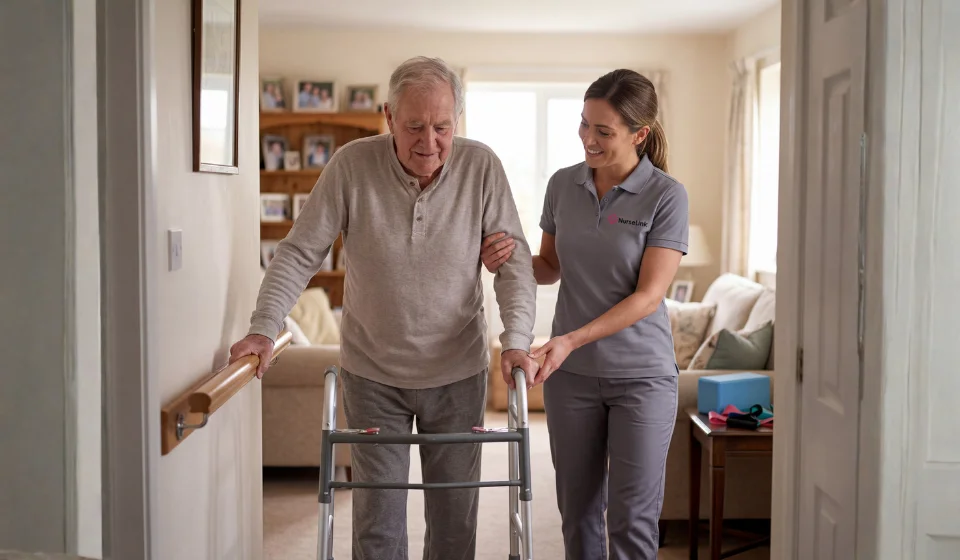
Her home environment was reviewed with her explicit involvement, and the modifications recommended were discussed with her as clinical proposals rather than imposed as safety requirements. She accepted some, pushed back on others and proposed alternatives for several that her support worker and the care coordinator assessed as clinically equivalent and agreed to. The outcome was a home environment that had been meaningfully made safer without feeling to her like it had been taken over.
Falls risk management during daily activities was incorporated into every visit as a matter of professional practice, not as an explicit monitoring exercise. Her support worker understood that a woman with her clinical background would find overt risk monitoring both unnecessary and faintly insulting, and managed the clinical responsibility with the matter-of-fact attentiveness of an experienced nurse rather than the pointed watchfulness of a supervision exercise.
Building Trust Across The Engagement
Trust with a client like this is not given at the beginning of an engagement. It is built through the accumulation of evidence that the care being provided meets the standard the client knows to look for. Over the weeks and months of NurseLink Healthcare’s involvement, that evidence accumulated.
Her support worker was never late. She never cut corners on medication management. She never talked down to her or around her or about her in ways that diminished her. She engaged with her genuine interest in her condition, her opinions about current Parkinson’s research and her occasionally sharp assessments of the healthcare system she had spent four decades inside. And she noticed, as the weeks went on, the moments when the professional composure was not the whole picture and when what was needed was not a clinical response but a human one.
There was a morning, several months into the engagement, when her support worker arrived to find her sitting at the kitchen table looking at a photograph. She did not ask what the photograph was or offer a clinical response to what she was seeing. She put the kettle on and sat down. They had a cup of tea. The clinical tasks of the morning were completed afterward, without fuss and without reference to the conversation that had happened over the tea. It was, her support worker later told the care coordinator, simply what the morning required.
Outcomes & Impact
She Accepted & Then Valued The Support
The most significant outcome of this engagement was a shift that took months to fully emerge and that no care plan could mandate. She moved from tolerating the NurseLink Healthcare support arrangement to genuinely valuing it. Not as a necessary intrusion, but as a part of her week that she had come to appreciate and, in time, to look forward to. The support worker who had been selected carefully for this engagement had become, over the months, someone she trusted clinically and liked personally. That combination, in a client who had been so resistant to receiving care, was the outcome that everything else depended on.
Her Safety At Home Improved Measurably
The falls risk that her GP had identified as a genuine concern, and that she herself had been managing alone with diminishing success, was substantially reduced over the course of the engagement. Her home environment had been modified with her involvement and her agreement. Her daily routine had been restructured around her medication windows in a way that reduced the periods of peak vulnerability. And the consistent clinical presence of a support worker who was watching without watching, attending to her safety as a matter of professional practice rather than pointed supervision, had caught and managed several situations that could otherwise have resulted in falls.
Her Daughter's Anxiety Was Relieved
Her daughter, who had been managing the particular anxiety of knowing that her mother’s situation was more precarious than her mother was willing to fully disclose, found that the presence of a reliable, clinically competent and genuinely trustworthy support arrangement around her mother gave her something she had not had for some time. She stopped lying awake wondering what was happening in the Hobart house that she could not see. She started calling her mother and finding, more often than not, that the conversation was about the garden and the community health group and the book she was reading, rather than about how her days were going.
She Remained At Home
Throughout the period of NurseLink Healthcare’s involvement, she remained in her own home, which was precisely where she wanted to be and where, with the right support in place, it was safe for her to be. The residential care conversation that had been hovering at the edge of the clinical picture when the engagement began had receded. It was not gone, because Parkinson’s is a progressive condition and the future holds what it holds. But for now, she was home, she was safe and she was, by her own account, managing.
A Reflection From The Client
Several months into the engagement, she said the following to her support worker, which was shared with the NurseLink Healthcare care coordinator with her permission:
“I spent forty years telling patients that accepting help was not weakness. I believed it then. I am not sure I believed it when it was my turn. You have managed to make me believe it again, which is not something I would have predicted when we first met. I want you to know that I notice everything. The medication timing. The way you handle the mornings when I am stiff. The fact that you have never once spoken to me as though I am not still a nurse. It matters. All of it matters.”
Key Takeaways From This Case Study
Healthcare professionals make some of the most complex homecare clients. A person with clinical knowledge and professional identity deeply tied to the giving of care brings a set of needs and resistances to the receiving of care that require a specific and carefully considered approach. NurseLink Healthcare’s response to this engagement recognised this from the outset and built the care plan accordingly.
The right support worker is the entire foundation. In a homecare engagement where the client’s acceptance of care depends on her respect for the person providing it, the selection of the support worker is the most consequential decision the provider makes. NurseLink Healthcare’s investment in finding the right person for this client, rather than the nearest available person, was what made the engagement work.
Clinical knowledge in a client is an asset, not an obstacle. A client who understands her own condition, has strong views about how her care should be delivered and will identify immediately when something is being done incorrectly is not a difficult client. She is a clinically informed partner in her own care, and an approach that treats her knowledge with respect rather than managing it as resistance will produce better clinical and human outcomes.
Trust in homecare is built through consistent, uncut standards. A client who knows what good care looks like will measure every visit against that standard. NurseLink Healthcare’s commitment to consistency, from punctuality to medication management to the manner in which every interaction was conducted, was what built the trust that made the engagement genuinely effective.
Conclusion
A woman who spent forty years caring for others does not stop knowing what good care looks like when it is her turn to receive it. She brings that knowledge into every interaction, and she deserves a homecare provider that meets her there rather than asking her to lower her standards in exchange for being looked after.
NurseLink Healthcare provided the support that this retired nurse in Hobart needed, delivered by a support worker whose clinical competence she respected and whose human warmth she came to genuinely value. She remained at home, she remained safe and she remained, in the ways that mattered most to her, herself.
That is what homecare at its best can do. Not just manage a person’s needs, but honour who they are while it does.
If someone you love is facing the challenge of accepting care after a lifetime of independence, or if they have a professional background that makes that acceptance particularly complex, we encourage you to reach out to the NurseLink Healthcare team. We understand that getting the right person through the door is everything, and we will not stop until we find them.
Latest Post
The Nurse Who Became The Patient
His Land, His Terms
Coming Home Differently
The Caregiver’s Pause
Still Going Home
Caring For Dad From Across The Country
Raising Three Kids While Living with Parkinson’s
A Family In Crisis. A Care Team Ready.
Homecare Cleaning Support
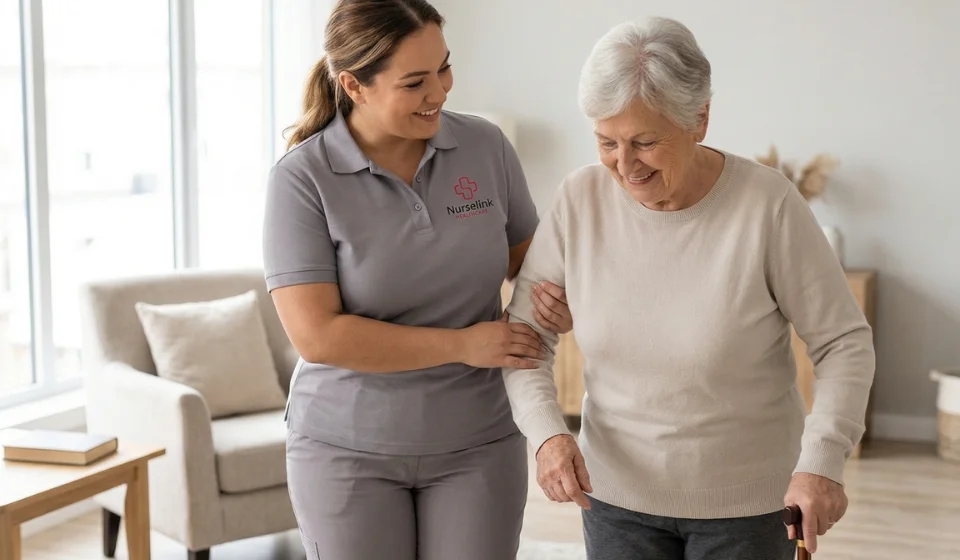
A Journey Of Comfort & Independence Through Homecare Support
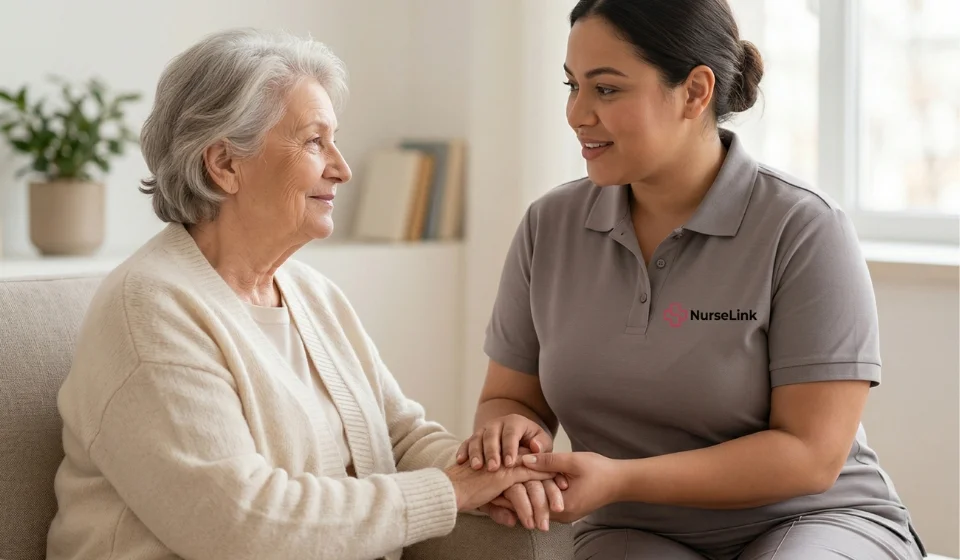
Margaret’s Journey