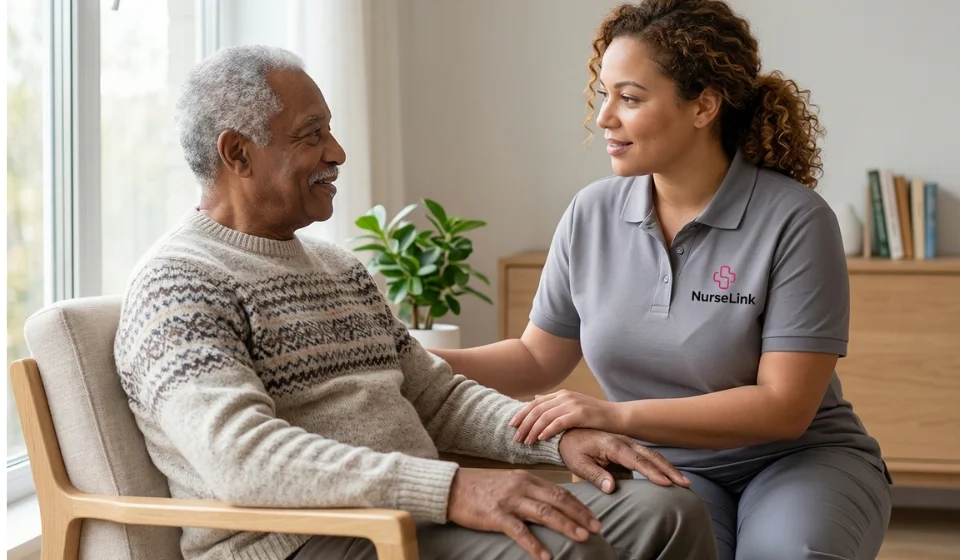
Where He Belonged
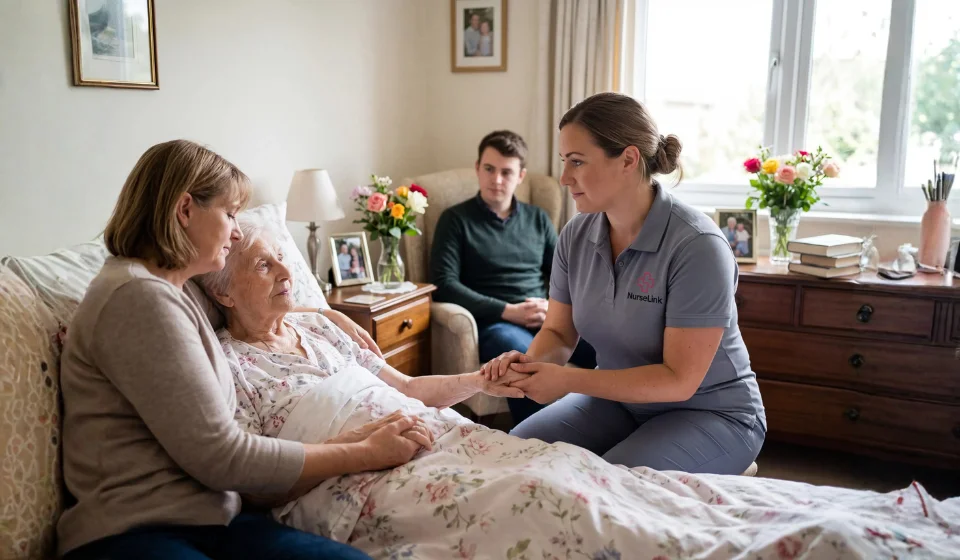
How NurseLink Healthcare Supported A Family Through End-Of-Life Care At Home
A Real-World Example Of Palliative Homecare Built Around A Family Facing The Hardest Chapter Together
Introduction
Death is the one experience that every person will face, yet it remains one of the least openly discussed in Australian life. When a terminal diagnosis arrives, it does not only change the future. It changes the present, immediately and irrevocably, for the person receiving it and for everyone who loves them.
For many Australians, the wish to spend their final moments at home – in familiar surroundings, among the people they love, in the place that holds the full weight of a life lived — is both deeply held and genuinely difficult to achieve. The clinical complexity of end-of-life care, the physical and emotional demands placed on family carers, and the practical realities of managing pain, comfort and dignity in a home setting all require a level of support that most families cannot provide alone, no matter how devoted they are.
Palliative homecare, done well, is not about managing the end of life. It is about enabling a person to live fully until the very end, to remain present in their own story, in their own home, surrounded by what matters to them. It is also about holding the family around them with the same care and intention, because the people who love a dying person are carrying something profound, and they deserve support too.
At NurseLink Healthcare, our palliative homecare services are built around this understanding. This case study documents how our team supported an elderly man in Perth, Western Australia, through the final months of his life following a terminal cancer diagnosis, enabling him to remain at home as he had wished, while supporting his wife and adult children through one of the most demanding experiences a family can face together.
To protect the privacy of the client and his family, his name and all identifying details have been kept confidential throughout this case study.
The Client's Background And His Situation
The client is a man in his mid-seventies who had lived in the same Perth suburb for nearly thirty years. He and his wife had built a full and active life there – a wide circle of friends, a home they had renovated together over the decades, and a backyard workshop where he had spent countless hours building furniture and restoring old clocks. He had worked as a civil engineer for most of his career before retiring in his late sixties, and retirement had suited him well. He was practical, self-contained and deeply rooted in his routines.
He and his wife had been married for over fifty years. Their two adult children, a son living in the Perth metropolitan area and a daughter who had relocated to regional Western Australia several years earlier, were both closely involved in their parents’ lives, visiting regularly and staying in frequent contact.
The diagnosis of advanced pancreatic cancer came after several weeks of investigations following a period of unexplained weight loss and abdominal discomfort. By the time the diagnosis was confirmed, the cancer had already spread beyond the point at which curative treatment was viable. His oncologist was honest and direct: the focus of care would be on quality of life and symptom management rather than treatment aimed at cure. The prognosis was measured in months.
He absorbed this information with the same quiet composure that characterised most of how he moved through the world. Within days, he had made his wishes clear to his wife, his children and his medical team. He wanted to be at home. He did not want to spend his remaining time in hospital or in a facility. He wanted to wake up in his own bedroom, sit at his own kitchen table and spend time in his workshop for as long as he was able. He wanted to die at home, if that could be managed, and he wanted his wife beside him.
His wife, who had been in good health but was herself in her early seventies and managing some mobility limitations, was unwavering in her commitment to honouring that wish. But she was also realistic about what it would mean. She had no clinical background. She had never provided nursing care. And the prospect of managing her husband’s comfort, symptoms and eventual decline while navigating her own grief was something she knew she could not do alone.
Their son, who worked full-time and had two teenage children at home, was present and committed but similarly without the clinical knowledge or available hours to provide consistent hands-on support. Their daughter, living several hours from Perth, was able to travel down for extended visits but could not be there continuously.
The family’s palliative care team, coordinating the clinical management of his condition, identified the need for structured homecare support and referred them to NurseLink Healthcare.
Understanding What The Client And His Family Actually Needed
The initial assessment NurseLink Healthcare conducted was, by design, led by the client himself. He was alert, articulate and had clear views about how he wanted the remaining time to go. He did not want to be treated as a patient in his own home. He did not want his house to feel like a medical environment. He wanted support workers who would treat him as a person first and a clinical case second, who would be honest with him and who would not tiptoe around him.
He spoke about what mattered to him. His workshop. His morning coffee at the kitchen table with his wife. The cricket on television. His grandchildren visiting on weekends. The particular rhythm of his days. He was not under any illusion about what was coming, but he was determined that what remained of his life would be recognisably his own.
His wife was equally clear in her own assessment conversation. She needed to understand what lay ahead — what the progression of his condition was likely to look like, what symptoms to watch for, how she would know when things were changing and who she should call. She needed someone she could contact at any hour if she was frightened or uncertain. And she needed, on some days, to simply not be alone in what she was carrying.
Their son articulated the family’s collective concern plainly: they wanted to get this right. They had one chance to give their husband and father the end of life he had asked for, and they were terrified of failing him through lack of knowledge, lack of support or simple exhaustion.
Their daughter, aware that she could not be physically present as often as she wished, needed a reliable line of communication that kept her genuinely informed about how her father was doing and what was happening.
The care plan NurseLink Healthcare developed was built directly from these conversations. It addressed the clinical requirements of palliative care, the practical demands of managing a complex home environment and the emotional and relational needs of every member of the family.
The NurseLink Healthcare Solution Delivered
Palliative-Experienced Support Workers Who Understood The Assignment
Palliative homecare demands a particular kind of person. The clinical skills required – symptom monitoring, personal care for a person with advancing illness, medication support and recognising the signs of change in a person’s condition are essential, but they are not sufficient. The person providing that care must be able to hold the emotional weight of what they are walking into each day, and to do so with steadiness, warmth and genuine presence.
NurseLink Healthcare assigned support workers with specific palliative care experience to the client’s roster. Before visits formally commenced, his primary support worker spent time with the client and his wife together, not conducting assessments, but simply getting to know them. Learning how he took his coffee. Hearing about the workshop. Understanding the shape of the household and the dynamic between a husband and wife that had been built over fifty years.
This investment in relationship before care was not a courtesy. It was clinical strategy. A palliative care client who trusts and is comfortable with their support worker will accept care more readily, communicate more honestly about their symptoms and experience a measurably better quality of daily life than one who is being attended to by someone they do not know or feel at ease with.
Comfort-Focused Daily Care That Moved At His Pace
The care schedule was structured around his daily rhythms rather than clinical convenience. Morning visits were timed to align with the part of the day when he typically had the most energy, supporting personal care and hygiene in a manner that maintained his dignity and involved him in the process for as long as he was able. Support workers were briefed specifically on his preferences, how he liked to start his day and the small rituals that mattered to him, and these were incorporated as fixed elements of each visit rather than optional additions.
As his condition progressed and his energy declined, the care schedule was adjusted accordingly. Visits became longer. The clinical support became more intensive. But the manner and the approach remained consistent: calm, unhurried and attentive to the person rather than focused only on the tasks.
On days when he was well enough to be in his workshop, his support worker was present not as a clinical observer but as a companion, someone who could sit nearby, be useful if needed and share in the quiet satisfaction of watching a man doing what he loved for as long as he was able to do it.
Symptom Management And Clinical Monitoring
Pancreatic cancer brings a particular and demanding set of symptoms, including pain, nausea, fatigue and changes in digestion that require careful and consistent management. NurseLink Healthcare’s clinical involvement provided the structured monitoring that enabled early identification of changes in his symptom profile, prompt communication with his palliative care medical team and timely adjustments to his pain management and comfort care regime.
Every visit incorporated a systematic symptom check and a detailed care record that formed part of the broader clinical picture reviewed by his palliative care nurse and GP. Support workers were trained in the specific indicators that would require escalation, and the escalation pathways were clearly established and rehearsed before they were needed.
His wife was provided with a clear, simple framework for what to watch for between visits and exactly who to contact in each scenario. The knowledge that there was always a next step, always someone to call and always a clear course of action replaced the paralysing uncertainty that had characterised her experience before NurseLink Healthcare’s involvement.
Medication Support And After-Hours Availability
Managing a palliative medication regime at home, which typically includes regular pain relief, breakthrough medications and medications for nausea and other symptoms, requires both clinical knowledge and a reliable system. NurseLink Healthcare introduced a structured medication support process, with each visit incorporating a medication check, prompting and documentation. His wife was supported to understand the regime clearly, including when and how to administer breakthrough medications and the clinical reasoning behind each component.
After-hours availability was a non-negotiable element of the arrangement. Palliative care does not observe business hours, and the moments of greatest uncertainty and fear for a family managing end-of-life care at home often arrive outside of them. The client’s wife had direct access to a NurseLink Healthcare contact at all hours, and used it on two occasions, once when his pain levels increased unexpectedly overnight and once in the final weeks of his life when she was uncertain whether what she was seeing represented a significant change in his condition. On both occasions, she received a prompt, calm and clinically informed response that resolved her uncertainty and enabled her to act appropriately.
Support For His Wife Through The Caregiving Journey
The care provided to the client’s wife was, in many respects, as significant as the care provided to the client himself. She was living alongside an experience of anticipatory grief, mourning someone who was still present, while simultaneously managing the practical demands of caring for an increasingly ill husband in a home setting.
NurseLink Healthcare’s support workers were attentive to her as well as to him. They noticed when she was struggling, when she had not eaten or slept properly and when the weight of what she was carrying was showing in ways she might not have named herself. They created space for her to step away from the caring role during visits, to sit in the garden, make a phone call or simply be in a different room without listening for sounds from the bedroom.
Her son visited regularly, and NurseLink Healthcare maintained consistent communication with him about how both of his parents were managing. His daughter, unable to be physically present as often as she wanted, received regular updates that gave her a genuine picture of how her father was progressing and what her mother needed.
Supporting The Family Through The Final Weeks
As the client moved into the final weeks of his life, the care arrangement intensified significantly. Visit frequency increased. The clinical complexity of his symptom management grew. And the emotional weight of what the family was carrying became heavier with each passing day.
Throughout this period, NurseLink Healthcare’s support workers remained steady. They continued to bring the same warmth, the same respect and the same quality of presence they had brought from the very first visit. They supported the family in understanding what the signs of approaching death looked like, so that they were not frightened by what they were seeing but were instead able to be present with him, calm and close, rather than overwhelmed around him.
He passed away at home, in his own bed, with his wife beside him and his children present. It was the death he had asked for.
Outcomes & Impact
He Remained At Home For The Entirety Of His Final Chapter
The most fundamental measure of success in this engagement was that the client’s clearly expressed wish, to remain at home and to pass away there, was fulfilled. This outcome, which can seem straightforward when stated simply, required months of coordinated, skilled and compassionate support to make possible. Without the right homecare arrangement in place, the clinical complexity of his final months would have necessitated hospitalisation. NurseLink Healthcare’s involvement made the difference between a wish that was granted and one that was not.
His Quality Of Life In His Final Months Was Genuinely Good
The client’s palliative care physician, reviewing the care record, noted that his symptom management throughout the period of NurseLink Healthcare’s involvement had been well-controlled and consistently monitored. Beyond the clinical picture, his family described a final period of life that, despite its sadness, contained real moments of connection, pleasure and peace. He spent time in his workshop. He watched the cricket. He had his morning coffee at the kitchen table with his wife. He was present in his own life until very close to the end.
His Wife Was Supported, Not Just Accommodated
The client’s wife described the NurseLink Healthcare team as the thing that made it possible for her to be his wife in those final months rather than solely his nurse. She was grateful for every piece of clinical support that was provided, but what she returned to repeatedly in reflecting on the experience was the quality of human presence that the team brought into her home, the sense that the people caring for her husband genuinely cared, and that she herself was seen and supported through something almost unbearable.
The Family Was Able To Be Present As His Family
With consistent professional support in place, the client’s son and daughter were freed from the role of ad hoc clinical carers and able to simply be with their father. Visits became about conversation, shared meals and sitting together rather than managed urgency and thinly veiled fear. That quality of presence, in the time that remained, was something the family would not have had without the support NurseLink Healthcare provided.
A Reflection From His Son
The client’s son shared his family’s experience with the NurseLink Healthcare care coordinator in the weeks following his father’s passing:
“Dad knew what he wanted and he told us clearly. For a long time, we were terrified we wouldn’t be able to give it to him, that it would just be too hard, that something would go wrong and he’d end up in hospital anyway. NurseLink made it possible. Not just the clinical side of things, though that was extraordinary. The people they sent – they knew Dad. They understood what he needed and how he needed it. Mum could be his wife again instead of his full-time carer. We could be his kids. He got to spend his last weeks at home, in his own bed, with all of us there. I don’t have words for what that means to our family.”
Key Takeaways From This Case Study
A good death at home does not happen by accident. The wish to die at home is common among older Australians. The ability to fulfil that wish safely, comfortably and with genuine dignity requires a level of coordinated clinical and personal support that most families cannot provide without expert help. Palliative homecare is not a last resort. It is the infrastructure that makes a person’s final wishes possible.
The family is always part of the care. In palliative homecare, the people surrounding the dying person are carrying an enormous weight. A homecare provider that supports only the clinical needs of the client while leaving the family to manage everything else has understood only half of what is required. Genuine palliative homecare holds the whole family.
Consistency of relationship is clinically significant in palliative care. A person who is seriously ill is not best served by a rotating roster of unfamiliar support workers. The trust built through consistent presence with the same people is both a clinical and a human asset. It enables better symptom reporting, greater acceptance of care and a quality of daily experience that inconsistency cannot replicate.
After-hours availability is not optional. End-of-life care does not follow a schedule. The moments when families most need clinical guidance and calm human support are often the ones that arrive in the middle of the night. A palliative homecare provider that is not genuinely accessible outside of business hours is not equipped for the reality of the work.
The goal is not a managed death. It is a lived life. Palliative care done well is not about preparing for death. It is about enabling a person to continue living with purpose, with comfort and with connection for as long as they have. The workshop, the morning coffee, the cricket on television — these are not incidental. They are the point.
Conclusion
A terminal diagnosis reframes everything, but it does not have to end the life it interrupts before the life itself is over. The months between a diagnosis and a death can contain real meaning, genuine connection and a quality of living that reflects who a person has always been, if the support around them is built with that possibility as its purpose.
At NurseLink Healthcare, we understand that palliative homecare is among the most serious responsibilities a care provider can hold. We hold it with the full weight it deserves, clinically, practically and humanly, because the people who come to us in their final chapter deserve nothing less, and neither do the families walking that road beside them.
This case study is a testament to what homecare can be at its most purposeful. A man who knew what he wanted and had the courage to say so. A wife and family who were determined to honour that wish but needed support to make it real. NurseLink Healthcare provided the care that made it possible and the presence that made it meaningful.
If you or someone you love is facing a terminal diagnosis and exploring the option of remaining at home, we encourage you to reach out to the NurseLink Healthcare team today. We would be honoured to help you navigate what lies ahead with the care, skill and compassion it deserves.
Latest Post
Where He Belonged
Caring For Dad From Across The Country
Raising Three Kids While Living with Parkinson’s
A Family In Crisis. A Care Team Ready.
Homecare Cleaning Support
A Journey Of Comfort & Independence Through Homecare Support
Margaret’s Journey