
Still Her Home
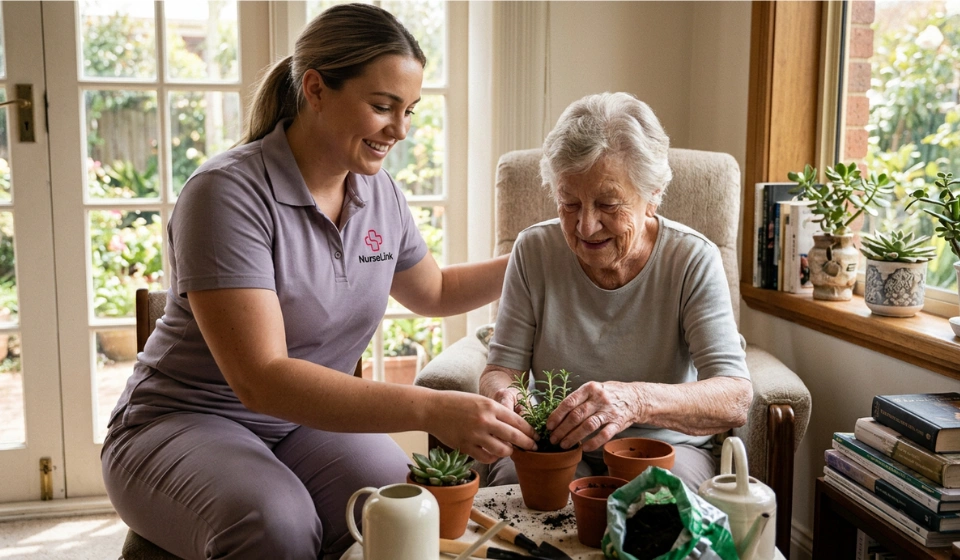
How NurseLink Healthcare Supported An Elderly Woman With Rheumatoid Arthritis
A Case Study In Homecare That Helped A Family Find A New Normal
Introduction
Rheumatoid arthritis does not arrive dramatically. It arrives in small ways, in the morning stiffness that takes longer to ease than it used to, in the jar lid that will not open, in the buttons that take twice as long and hurt twice as much. The losses are incremental and accumulate quietly, which means the person experiencing them often does not fully register how much has changed until something specific, a fall, a task she simply cannot complete, a morning she cannot get out of bed without help, makes the accumulation undeniable.
For the family around that person, the recognition often arrives at a similar pace. The visits where they notice the house is less tidy than it used to be. The phone calls where her voice sounds more tired. The particular moment when someone says aloud what everyone has been thinking, that she is not managing the way she was, and the family has to reckon with what that means and what comes next.
What comes next, for many families, is a difficult negotiation between a parent who values her independence above most things and adult children who value her safety and who are genuinely uncertain about how to support her without taking over. It is a negotiation that requires care and patience and the particular sensitivity of people who understand that independence, for a woman who has managed everything in her life for nearly eighty years, is not simply a preference. It is part of who she is.
Homecare that navigates this negotiation with skill, that provides the practical clinical support a person with severe rheumatoid arthritis requires while preserving the independence and the dignity that make her home feel like hers, is not easy to find. When it is found, it changes the daily experience of everyone in the family.
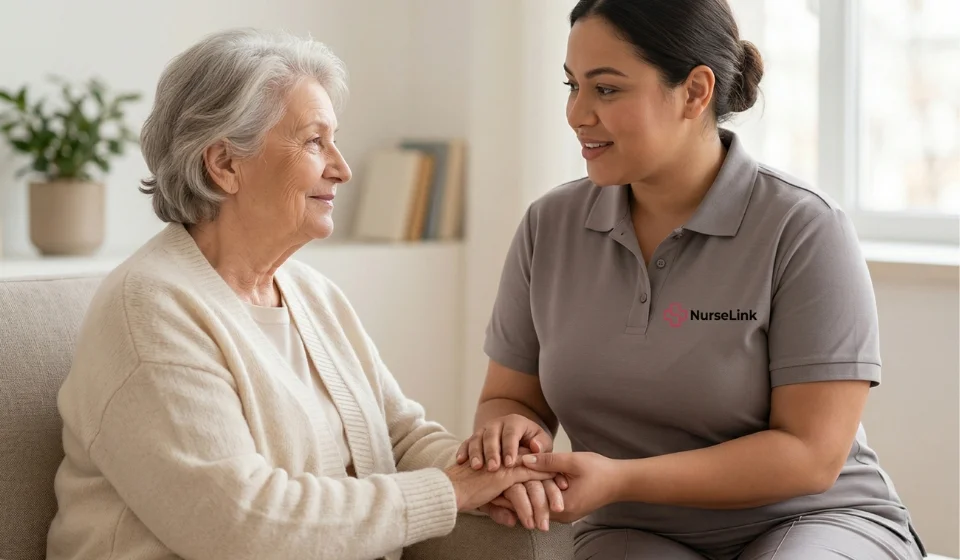
At NurseLink Healthcare, we understand that homecare for an elderly person is always homecare for a family. This case study documents how our team supported an elderly woman with severe rheumatoid arthritis in Wagga Wagga, New South Wales, and the family that was trying to find its way to a new normal around a condition that had been changing everything, slowly and then all at once.
To protect the privacy of the client and her family, all names and identifying details have been kept confidential throughout this case study.
The Client & Her Situation
The client is a woman in her late seventies who has lived in the same house in Wagga Wagga for over forty years. She raised three children there, spent decades as a community volunteer and had built, by the time her rheumatoid arthritis had progressed to its current severity, the kind of deeply rooted local life that a person accumulates across four decades in one place. She knew her neighbours by name and by history. She had her routines, her preferred shops, her regular commitments. She had her garden, which she had maintained with considerable dedication and which had become, over the years, one of the things she was most proud of and most identified with.
The rheumatoid arthritis had been diagnosed in her early sixties and had been managed with varying degrees of success across the intervening years. There had been periods of relative stability and periods of flare that had required medication adjustments and careful management. The past two years had been harder than the ones before them. The inflammation had progressed in her hands, making fine motor tasks increasingly difficult and painful. Her knees and hips had been affected, limiting her mobility and her confidence on uneven surfaces. The fatigue that RA produces had become a more consistent feature of her days, making the morning hours the window in which she had the most capacity and the afternoons a period of careful conservation.
She had been managing alone, as she had always managed things, which was both admirable and, by the time the homecare assessment was conducted, no longer entirely safe. Her children, two daughters and a son spread across regional and metropolitan New South Wales, had been watching the situation develop with the particular anxiety of adult children who visit as often as they can and know that the visits are not frequent enough to provide real oversight. Each visit had revealed, in small ways, that things had changed since the last one.
The conversation that had finally produced the referral to NurseLink Healthcare had happened at a family gathering, when her son had watched his mother struggle to carry a pot from the stove to the table and had understood, in a way that the phone calls had not conveyed, how much had changed since his last visit. The family had talked after she had gone to bed and had agreed, with the mixture of relief and guilt that these conversations always carry, that something needed to change. Her son had made the call to NurseLink Healthcare the following week.
What The Family Was Navigating
The three siblings had different relationships with the situation, as adult children in these circumstances tend to have. Her elder daughter, who lived closest, had been the one making the most frequent visits and carrying the most detailed picture of how her mother was managing day to day. She had been managing the anxiety of that knowledge alongside her own full life, without a clear path to addressing what she could see. She had raised the question of additional support with her siblings several times over the preceding year, and each time the conversation had stalled on the question of how to raise it with their mother in a way that would not produce a response of determined refusal.
Her younger daughter, who lived furthest away, had been managing the particular helplessness of distance, flying down every few months and arriving to a version of the situation that was harder than the phone calls had prepared her for. She had been carrying the guilt of someone who is not there enough and who knows it and who does not know how to change it without disrupting her own life more than she can sustain. Her son, who lived in Sydney and whose visit had been the catalyst for the family conversation, had been the one to finally name what everyone had been circling around.
Their mother had her own clear position. She did not want to move. She did not want residential care. She did not want her children to feel responsible for her daily management or to reorganise their lives around her needs. And she was, in the specific way of a woman who has been self-sufficient for seventy-eight years, genuinely resistant to the idea that what she needed was help, even as the evidence that she needed it was becoming daily more apparent.
The negotiation between her position and her children’s concern was the central challenge the family was navigating when NurseLink Healthcare became involved. It was a negotiation that required the homecare arrangement to align itself with her terms rather than her children’s anxiety, because an arrangement that overrode her position would not last and would damage the family relationships it was supposed to relieve.
Understanding What She & Her Family Needed
The initial assessment NurseLink Healthcare conducted was one that began, deliberately, with her rather than with her children, because the arrangement was going to be in her home and its success depended on her acceptance of it. Her children had been consulted and had provided valuable context. But the first extended conversation was hers.
She was direct about what she would and would not accept. She would accept help with the tasks that her hands and her joints made genuinely dangerous or genuinely impossible. She would not accept a support arrangement that treated her as incapable of managing her own life or that sent people into her home who approached her with the particular condescension that some people adopt toward elderly women. She wanted support workers who would follow her lead about what help was welcome and what was not, and who would not make assumptions based on her age or her diagnosis.
She was specific about the practical priorities. Meal preparation had become the most physically demanding part of her day, because the grip required for cutting, lifting and the fine manipulations of cooking was exactly the grip her hands could no longer reliably produce. Personal care on her worst days required assistance she was not comfortable asking her children for. The garden, which she was not willing to surrender, needed support that her body could no longer provide without the risk of a fall on the uneven path between the garden beds.
Her children needed something different but equally specific. They needed to know she was safe between their visits. They needed the clinical monitoring that her rheumatoid arthritis management required to be in place and functioning. They needed an honest account of how she was actually managing, not the account she gave them on the phone, which was always somewhat better than the reality. And they needed, all three of them and in slightly different ways, to be released from the specific anxiety of not knowing.
The care plan NurseLink Healthcare developed was built around the full picture of what she had said she needed and what her family had added.
The NurseLink Healthcare Solution
Support Workers Who Followed Her Lead
NurseLink Healthcare’s selection of support workers for this engagement was driven by the specific clinical requirements of severe rheumatoid arthritis care and by the equally specific personal requirements of a woman who had told the care coordinator exactly what kind of presence she could and could not accept in her home.
The support workers identified had experience with musculoskeletal conditions and the particular care requirements of RA at her stage of the condition, including familiarity with joint protection techniques, pain management support and the specific handling approaches that reduce rather than exacerbate inflammation during personal care. Beyond the clinical credentials, they were people whose manner the care coordinator had assessed as genuinely suited to working with a woman who would know within five minutes whether they respected her or were managing her.
The introductory visit was arranged as a conversation rather than a clinical assessment. It took place in her kitchen, with tea, without clipboards or formal structure. The support worker who would become her primary worker asked about the garden before she asked about the arthritis. She spent time getting to know the person before she got to know the condition, because the care coordinator had understood from the assessment that the garden was as much a part of the clinical picture as the inflammation in her joints. A woman who cannot tend her garden is a woman whose daily sense of purpose and pleasure has been taken from her, and that loss carries clinical weight.
By the end of the introductory period, she had confirmed, in the particular way she confirmed things, that the arrangement would do. Her elder daughter, told about the confirmation, described it to the care coordinator as the best possible outcome she had dared to hope for.
Clinical Support Built Around Her Priorities
The care plan incorporated the specific clinical support her RA management required without making the clinical management the defining feature of every visit. Joint assessment and pain monitoring were conducted at every visit, with documentation communicated regularly to her rheumatologist and GP. Her medication regime, which was complex and had been adjusted several times across the preceding two years, was overseen with the precision it required and any changes communicated to her medical team promptly.
Assistive devices for the kitchen and personal care tasks that her hands could no longer manage safely were introduced gradually and in a way that framed them as tools that restored capability rather than as markers of decline. The framing mattered to her and the support workers who had been briefed on its importance managed it accordingly, presenting each adaptation as a practical solution to a specific problem rather than as an accommodation to her limitations.
The meal preparation support that she had identified as the practical priority was managed with the specific understanding that the meals were hers. Her support worker assisted with the tasks her hands made dangerous or impossible, the chopping, the heavy pot lifting, the fine manipulations that produced pain and risk, while she directed the cooking and remained the person who decided what was being made and how. The distinction between assistance and takeover was maintained consistently and without commentary, because it did not need to be stated to be real.
The Garden, Preserved
The garden had been the subject of a specific conversation between the care coordinator and the client that the care coordinator considered one of the more important conversations of the whole assessment process. She had not raised it expecting it to be addressed in the care plan. She had raised it because it was important to her and she had learned across her life that the things that are important to you are worth naming, regardless of whether the person you are talking to considers them relevant.
NurseLink Healthcare incorporated garden assistance explicitly into the care plan, not as an optional extra but as a goal with the same standing as the clinical management tasks. Her support worker accompanied her to the garden on the mornings when her energy and her joint status allowed, managing the heavier physical tasks, the deeper weeding, the watering of the beds she could not reach without the fall risk the uneven path created, while she directed what needed doing and did what she could safely do.
The garden did not stop being her garden. It became her garden with support, which was both clinically appropriate and personally significant in ways that her family understood immediately when they heard about it. Her younger daughter, visiting two months into the engagement, walked through the garden with her mother on a Tuesday morning and told the care coordinator afterward that it had been the first visit in over a year where her mother had seemed genuinely happy rather than carefully managed.
Keeping The Family Informed Without Overwhelming Them
NurseLink Healthcare established a communication arrangement with her three children that provided the regular, honest updates they needed without creating a new management burden that added to rather than reduced the family’s load. Her elder daughter, as the closest and most frequently present of the three, received a brief weekly summary. Her son and younger daughter were included when anything required their attention or when the weekly summary contained something the care coordinator considered worth their knowing.
The summaries were specific because vague reassurance was not what the family had asked for and was not what they needed. When her pain levels increased significantly in the third month of the engagement, the summary said so clearly, explained what had been observed across visits, confirmed that her rheumatologist had been contacted and outlined what had been recommended. Her children received the information, made their own calls to their mother and were able to have genuine conversations about how she was actually feeling rather than conversations about whether they should be worried.
When the following week’s summary indicated that the medication adjustment her rheumatologist had made was producing an improvement, that was communicated with the same specificity. The family had a real-time clinical picture of their mother’s management that they had not had before the engagement, and the picture allowed them to calibrate their concern rather than carrying it as an undifferentiated background anxiety.
Outcomes And Impact
She Remained In Her Home, On Her Terms
She remained in the house she had lived in for forty years, managing her daily life with the right level of support, in the specific and particular way that was hers. The meals she made were the ones she decided on. The garden was tended to her specifications. The people who came into her home followed her lead. This outcome, which she had been most afraid would not be possible on her terms, was the one that everything else rested on, and NurseLink Healthcare’s support made it real without requiring her to compromise the things that made it meaningful.
Her Rheumatoid Arthritis Was Better Managed
The consistent clinical monitoring built into every visit produced a clearer and more current picture of her RA status than her quarterly rheumatology appointments alone had been providing. Her rheumatologist, reviewing the detailed visit documentation at a six-month appointment, noted that the monitoring data had allowed a medication adjustment that she considered clinically significant and that had produced an improvement in her inflammatory markers that the standard appointment schedule would not have identified at the same time. The homecare had contributed directly and specifically to her clinical management in a way that her children had not anticipated when the engagement began.
Beyond the clinical picture, her pain was better managed day to day because the activities that had been exacerbating her inflammation were now being handled with joint protection techniques that her previous unsupported management had not applied. The support workers had been implementing the approach that her occupational therapist had recommended and that she had been unable to apply consistently without assistance. The difference was measurable in how her mornings started and in how much she had in reserve for the rest of the day.
The Family Found The New Normal They Had Been Looking For
The three siblings, who had arrived at the engagement from three different positions of anxiety and helplessness, found across the months of the homecare arrangement that the new normal they had been looking for had arrived without announcement and without drama. Their mother was being looked after in the way she wanted to be looked after. The house was still hers. The garden was alive. The meals were hers. And the honest, regular communication from NurseLink Healthcare had given each of them the information they needed to stop carrying their concern as a permanent low-level state of alarm.
Her elder daughter described the change at a review meeting several months into the engagement as the difference between managing a situation and living alongside a person she loved who was being properly supported. She said it quietly and without elaboration, in the tone of someone for whom the distinction had taken on considerable personal meaning. The care coordinator understood exactly what she meant.
Her younger daughter’s visits changed in quality across the engagement period. She arrived to a house that was in good order, a garden that was maintained and a mother who was genuinely rather than defensively fine. The visits became what visits between a daughter and her mother are supposed to be, time spent together rather than time spent assessing how bad things had gotten since the last one.
Her son, who had been the one to make the call that started the engagement, told the care coordinator at a review meeting that he had stopped rehearsing the difficult conversation he had been expecting to have with his mother about the future. The future she was currently in was working. He was not going to borrow trouble from a future that had not arrived.
A Reflection From Her Elder Daughter
Several months into the engagement, she shared the following with the NurseLink Healthcare care coordinator:
“We spent a long time not knowing how to help her without taking over. She is a proud woman and she should be proud, she has managed everything in her life extraordinarily well. What NurseLink found was the line between the help she needed and the help she would accept, and they stayed on the right side of it. She is in her home, she is in her garden, she is still directing her own kitchen and she is still herself. That is what we wanted for her and it is what she wanted for herself. Finding that it was possible, on her terms, has changed how all of us feel about everything.”
Key Takeaways From This Case Study
Homecare for an elderly person with a degenerative condition must preserve what matters to her, not just manage what threatens her. A garden and the independence to direct her own kitchen are not peripheral to clinical care. For this woman, they were central to the quality of life that made staying in her home meaningful. NurseLink Healthcare treated them as clinical priorities accordingly.
The family’s new normal depends on honest, specific and regular information. Adult children managing from a distance cannot find their equilibrium without a reliable and current clinical picture of how their parent is actually doing. Vague reassurance produces anxiety. Specific, honest information produces calibrated concern, which is manageable in a way that anxiety is not.
Support workers who follow the client’s lead produce better clinical and relational outcomes. A woman who accepts help because the support worker respects her authority in her own home engages more honestly with the support, communicates more accurately about her symptoms and manages her condition more effectively than one who tolerates help she resents. The selection of support workers with the right personal qualities was as important as the selection of support workers with the right clinical credentials.
Clinical monitoring between specialist appointments has direct and specific clinical value. The rheumatologist’s medication adjustment, made on the basis of monitoring data from homecare visits, was a clinical outcome that the quarterly appointment schedule alone would not have produced at the same time. Homecare that generates reliable clinical documentation extends the reach of the specialist team into the patient’s daily life in ways that improve outcomes.
Conclusion
Severe rheumatoid arthritis takes things gradually and then all at once, and the family that is watching it happen needs a homecare arrangement that responds to both the gradual and the sudden with the same clinical and human quality. It also needs an arrangement that understands that the person at the centre of it has her own position about what help she will and will not accept, and that the arrangement’s effectiveness depends on honouring that position rather than overriding it.
For the family at the centre of this case study, NurseLink Healthcare provided homecare that kept their mother in her home, in her garden and in the life she had built over forty years in Wagga Wagga. The new normal they had been looking for arrived not because everything had been fixed but because the right support had been found, on the right terms, by the right people.
She is still in her home. The garden is still hers. The meals are still hers. That is the measure of it.
If your family is navigating the challenge of supporting an elderly parent with a chronic condition and trying to find the right balance between the help she needs and the independence she deserves, we encourage you to reach out to the NurseLink Healthcare team. We are here to find that balance with you.
Latest Post
More Than Domestic Support
Still Her Home
The Weight She Was Carrying
Caring For Her Without Losing Himself
Managing Diabetes Without Sight
The Recovery Nobody Predicted
Finding Their Footing Again
On His Own Terms
When MS Moves In, The Whole Family Feels It
The Nurse Who Became The Patient
His Land, His Terms
Coming Home Differently
The Caregiver’s Pause
Still Going Home
Where He Belonged
Caring For Dad From Across The Country
Raising Three Kids While Living with Parkinson’s
A Family In Crisis. A Care Team Ready.
Homecare Cleaning Support
A Journey Of Comfort & Independence Through Homecare Support
Margaret’s Journey