
The Recovery Nobody Predicted
How NurseLink Supported A Perth Stroke Survivor Beyond His Clinical Prognosis
A Homecare Case Study In Ambition, Clinical Safety And A Family That Believed Him
Introduction
A stroke prognosis is not a prediction. It is an estimate, made by clinicians who have seen many stroke recoveries and who understand, from that experience, what the likely trajectory looks like for a person with a particular pattern of damage in a particular area of the brain. The estimate is usually honest and usually well-intentioned and sometimes, for the person it is delivered to, entirely wrong.
Not because the clinicians were mistaken about the clinical picture. But because the clinical picture does not fully account for the person inside it. The determination that refuses to treat a ceiling as a ceiling. The particular stubbornness of a man who has always done things his own way and who sees no reason why a stroke should change that. The family that decides, against the weight of medical caution, to believe in the version of recovery that the statistics do not support but that the person they love is insisting is possible.
Homecare in this context is not simply the clinical management of a post-stroke patient in a home setting. It is the infrastructure that makes an ambitious recovery possible. The structured support that allows a man who is pushing hard against his own limitations to do so safely. The clinical oversight that catches the signs of overexertion before they become setbacks. The practical assistance that removes the daily friction that would otherwise consume the energy he needs for the recovery work itself. And the human presence that holds the family steady while they navigate the particular experience of watching someone they love fight for something they are not sure he can reach.
At NurseLink Healthcare, we believe that recovery belongs to the person doing it, and that our role is to support it as far as it will go. This case study documents how our team supported a man in his fifties in Perth, Western Australia, through a stroke recovery that exceeded every clinical projection, and the family that learned, alongside him, to redefine what recovery looked like.
To protect the privacy of the client and his family, all names and identifying details have been kept confidential throughout this case study.
The Client & His Family's Situation
The client is a man in his mid-fifties who lives in Perth with his wife and their two teenage children. He had spent most of his working life in a senior project management role in the resources sector, a career that suited a person who was decisive, energetic and not particularly accustomed to being told what he could or could not do. He was, by his wife’s account and his own history, a man who operated at a pace that the people around him often found difficult to keep up with, who had strong views about most things and who had never, in the course of their marriage, accepted a limitation he did not believe was necessary.
The stroke occurred at work, in the middle of an ordinary morning, and was severe enough that his colleagues had called the ambulance before he had fully understood what was happening. He was admitted to a major Perth hospital, where the acute management of his stroke was handled with the speed and the clinical thoroughness that the severity of his presentation required. He spent two weeks in the acute setting followed by three weeks in inpatient rehabilitation.
The stroke had affected the left side of his brain, producing right-sided weakness that was significant but not complete, speech difficulties that had improved considerably during his inpatient rehabilitation but that still required ongoing speech therapy, and cognitive changes including fatigue and processing speed reductions that his rehabilitation team had assessed as likely to persist and to place meaningful limits on his return to his previous level of work and activity.
His rehabilitation team had been honest with him and with his family at discharge. The recovery to date had been good. The prognosis for further improvement was cautiously optimistic in some areas and more guarded in others. He would likely continue to make gains over the following months. The ceiling they described was not a ceiling they said with certainty, but it was the ceiling that their clinical experience suggested was realistic, and they were clear that his previous pace of work and life was probably not what recovery was going to return him to.
He had listened to this with the particular patience of a man who was waiting for the clinicians to finish so he could tell them what he had decided.
He had decided he was going to get back.
What The Family Was Navigating
His wife had been present for every clinical conversation since the stroke, and she had absorbed what the rehabilitation team had said with the combination of hope and realism that she had brought to most of the significant challenges of their marriage. She understood what the clinical team was telling them. She also understood her husband, and she knew that the version of recovery he had decided on was not the one the clinical team was describing.
She was not sure who was right. She hoped it was him, because she always hoped it was him, and because the alternative was something she was not ready to fully face. But she was also frightened in the way that the spouse of a man who is pushing hard against his own limitations is frightened, not of the pushing itself but of what would happen if the pushing produced a setback that the recovery could not absorb.
Their teenage children had managed the stroke and its aftermath in the ways that teenagers manage serious family events, which is to say with a mixture of visible resilience and invisible processing that their parents could see the edges of but not the full extent of. Their son, who was seventeen, had become quieter than usual and more present at home, which his mother interpreted as his way of being near the situation without knowing what to do with it. Their daughter, who was fifteen, had oscillated between bursts of determined cheerfulness that she clearly felt the family needed and moments of visible distress that she clearly felt the family should not see.
The family had arrived home from the hospital discharge with a rehabilitation plan, a list of outpatient appointments and a household that needed to organise itself around a recovery that none of them had a template for. NurseLink Healthcare was engaged through a recommendation from his occupational therapist, who had identified the gap between what the family could provide alone and what the recovery was going to require.
Understanding What He & His Family Needed
The initial assessment NurseLink Healthcare conducted was one of the more memorable the care coordinator had undertaken, primarily because the client had specific views about what the assessment was for and was not inclined to let it become something other than what he had decided it should be.
He was not looking for a homecare arrangement that managed his recovery. He was looking for a homecare arrangement that supported it, which he considered a meaningful distinction. He needed practical assistance with the daily tasks that his current physical and cognitive capacity made difficult, not because he planned to need that assistance indefinitely but because the energy that daily tasks consumed was energy he needed for the recovery work itself. He needed clinical monitoring that kept his neurological and physical status under appropriate oversight, because he was aware, even if he did not always welcome the awareness, that pushing hard without clinical eyes on what was happening was not intelligent risk management. And he needed support workers who would not treat his goals as unrealistic, because he had enough people doing that already and he did not intend to have more of them in his house.
His wife added, in the way that she added things, which was quietly and precisely and at the moment when it was most useful, that she needed the homecare arrangement to help her understand when the pushing was productive and when it was putting him at risk. She was not asking for the clinical team to override his determination. She was asking for the clinical information she needed to support him intelligently rather than simply watching and hoping.
Their children were not formally part of the assessment conversation, but they were present in the house, and the care coordinator, who had worked with families through difficult recoveries before, noted what she observed and built it into how she understood what the family needed. They needed their father to be taken seriously. They needed the arrangement around him to be organised and competent enough that the daily management of his recovery was not something they had to think about. And they needed, though no one said it, for the possibility that he was right about how far he could go to be treated as a genuine possibility rather than a wish.
The NurseLink Healthcare Solution
Support Workers Selected For His Recovery Goals
The selection of support workers for this engagement was driven by his clearly stated requirement for people who would support his recovery rather than manage it, and by the care coordinator’s assessment that this meant people who were clinically competent, professionally confident and personally suited to working alongside a determined man who was going to push and who needed support workers who would push with him rather than pull him back.
NurseLink Healthcare identified support workers with specific post-stroke homecare experience and the personal qualities the care coordinator had assessed as essential. They needed to be people who did not mistake clinical caution for a ceiling, who understood the difference between the limits that needed to be respected for safety reasons and the limits that existed because no one had yet tried the right approach, and who would bring to the work the particular combination of clinical rigour and genuine belief in the person’s capacity that ambitious post-stroke recovery required.
The primary support worker introduced to him was, in the care coordinator’s assessment, the right person. He was experienced in neurological homecare and rehabilitation support. He was direct and practical in a manner that suited the client. And he had, the care coordinator noted in her briefing notes, the quality of genuinely not being intimidated by someone who knew what they wanted and was not going to pretend otherwise.
Their first meeting was characterised by a directness on both sides that the care coordinator found entirely promising. The client told the support worker what he was working toward. The support worker told him what he could help with and what he would be watching for. Neither of them spent time on reassurances that neither was looking for.
Daily Support That Freed His Energy For Recovery
The practical support that NurseLink Healthcare’s visits provided was structured explicitly around the goal of freeing his energy for the recovery work itself. Personal care assistance in the morning, which reduced the physical and cognitive effort of starting the day, was delivered with the efficiency and the dignity that a man who had always been physically capable and professionally senior deserved. Meal preparation, household management and the daily administrative tasks that his cognitive fatigue made more demanding than they had previously been were managed consistently and without fuss.
The effect of this was measurable in his rehabilitation engagement. His outpatient physiotherapist and speech therapist, who reviewed his progress at regular intervals, noted that he was arriving at therapy sessions with more in reserve than they had expected, and that his engagement with the therapy work was at a level of intensity and consistency that was producing gains at a rate they found encouraging and somewhat surprising.
His support worker coordinated closely with his outpatient therapy team, ensuring that the exercises and rehabilitation tasks his therapists had prescribed were being supported at home between sessions, with the right approach and the right level of challenge. The recovery work did not stop when the therapy sessions ended. It continued at home, supported by a team that understood what the goals were and that held them consistently.
Clinical Monitoring That Kept Him Safe While He Pushed
The clinical monitoring that NurseLink Healthcare built into every visit was the element of the engagement that his wife had identified as most important for her own capacity to support him. Every visit incorporated a structured neurological and physical assessment that tracked his status against his baseline, identified any signs of overexertion or concerning change and provided the clinical picture that informed both his care coordinator’s management of the arrangement and his medical team’s oversight of his recovery.
On two occasions during the engagement, the monitoring identified signs of fatigue-related deterioration that prompted a conversation with his treating team and a temporary adjustment to his rehabilitation intensity. Both occasions were managed without significant setback, which the care coordinator attributed directly to the early identification that consistent monitoring made possible. Without that monitoring, both situations would likely have been identified later, with more significant consequences.
He did not always welcome these conversations. He was a man who preferred to push through rather than pull back, and the occasions when the clinical picture required pulling back were occasions that required the particular combination of clinical firmness and personal respect that his support worker had in sufficient measure to manage them without damaging the trust that the recovery depended on. The support worker held his ground on the clinical requirements and maintained his respect for the client’s goals simultaneously, which was the right approach and the difficult one.
His wife received after every visit a clear and honest account of how he had been, what the monitoring had shown and anything she needed to be aware of. She used this information to calibrate her own support of him between visits, and the care coordinator noted at review meetings that the quality of her engagement with the clinical picture had become increasingly sophisticated across the months of the engagement, reflecting a wife who had been given the information she needed and had used it intelligently.
Holding The Family Through The Harder Weeks
The recovery was not linear. There were weeks when the progress was visible and the household was lighter for it, and there were weeks when the fatigue was heavier and the processing difficulties were more pronounced and the distance between where he was and where he had decided he was going felt, to everyone in the household, very large.
NurseLink Healthcare’s care coordinator checked in with the family, and specifically with his wife, through these periods with the attentiveness that the situation required. She did not minimise the difficulty of the harder weeks. She did not offer reassurances she could not support with evidence. She provided what the family actually needed, which was honest, specific information about what was happening clinically and what it meant for the recovery trajectory, delivered with the warmth of someone who understood the weight of what the family was carrying.
Their teenage children, who had been watching from the edges of the recovery with their particular combination of love and helplessness, found across the months of the engagement that the organised, competent support around their father had an effect on the household atmosphere that reached them even though it was not directed at them. The household was less frightening when the recovery was clearly being managed well. They relaxed in a way that their mother noticed and that she mentioned to the care coordinator with the particular gratitude of a parent who had been watching her children manage something they should not have had to manage.
Outcomes & Impact
He Exceeded The Clinical Projections
The outcome that the clinical team at his rehabilitation hospital had described as outside the realistic range was, by the assessment of his treating neurologist at a twelve month review, substantially achieved. His right-sided strength had recovered to a level that his rehabilitation team had not projected. His speech had returned to a level of fluency that was close to his pre-stroke baseline. His cognitive fatigue remained a feature of his daily life, managed through the strategies he had developed with his neuropsychologist, but his capacity to work, in a modified form, had been restored to a point that his return to employment in a reduced capacity had become a realistic and pursued goal.
His treating neurologist, reviewing the recovery at the twelve month mark, described it as one of the more impressive post-stroke recoveries he had seen in a patient of his age and injury severity. He attributed it to several factors, the quality of the acute and inpatient rehabilitation, the patient’s own determination and the quality and consistency of the homecare support that had sustained the recovery work across the months following discharge.
His Wife Found Her Way Through
His wife had entered the engagement frightened and had navigated it with the intelligence and the love that had characterised her management of most of the significant challenges of their marriage. The honest clinical communication she had received from NurseLink Healthcare across the engagement had given her what she needed to support him without either enabling the pushing that needed limiting or limiting the pushing that needed enabling. She had learned, across the months of the engagement, to read the clinical picture with enough sophistication to trust her own judgment about when he needed support and when he needed to be left to do what he had decided to do.
She described the engagement, at a review meeting toward the end of the formal homecare period, as the thing that had allowed her to be his wife through the recovery rather than his nurse. The support workers and the clinical oversight had held the clinical dimensions of the recovery, and that had freed her to hold the person.
Their Children Redefined Who Their Father Was
The recovery their children had watched across the months of the engagement had given them something that stroke tends not to give the families of its survivors, which is a version of the story that ended with the person they loved going further than anyone had said he would go. Their son, who had been seventeen when the stroke occurred and who was approaching his nineteenth year by the time the formal homecare engagement was concluding, told his mother at one point that watching his father’s recovery had changed how he thought about what people were capable of. Their daughter, who had been fifteen and was now seventeen, had written something about it in a school essay that her English teacher had read to the class, with her permission, because she had said it better than the teacher could have said it.
He did not know about the essay until several months later, when his daughter told him. He read it and did not say much, which was not because it had not affected him but because it had affected him too much for the words that were available to be sufficient. He told his wife later that evening that it was the best thing he had read in a long time. She agreed that it was.
The Family Had A Different Story To Tell
The family that had arrived home from the hospital discharge without a template for what recovery looked like had, by the conclusion of the engagement, a story that was specifically and particularly theirs. Not the story of a stroke that had taken things and left them diminished. The story of a man who had decided what recovery was going to look like and a family that had decided to believe him and a homecare arrangement that had given all of them the support they needed to find out whether he was right.
He was right. Mostly. Further than anyone had said he would go.
A Reflection From His Wife
Toward the end of the formal homecare engagement, she shared the following with the NurseLink Healthcare care coordinator:
“When the rehabilitation team told us what to expect, I believed them and he didn’t. I have spent the last year finding out that he was closer to right than they were, and that the homecare support we had was a significant part of why. The NurseLink team gave him the space to push and the safety net to push within. They gave me the information I needed to support him without either holding him back or letting him hurt himself. And they gave our kids the experience of watching their father do something that nobody said was possible. I do not know how to put a value on that. I just know it was everything.”
Key Takeaways From This Case Study
A stroke prognosis is an estimate, not a ceiling. Clinical projections for stroke recovery are built on population-level data and honest clinical experience. They are valuable and they deserve to be taken seriously. They are not always accurate for the specific individual, particularly when that individual brings to the recovery a level of determination and supported effort that the projection did not fully account for. Homecare that supports ambitious recovery rather than managing expected decline can contribute to outcomes that the prognosis did not anticipate.
Post-stroke homecare must balance clinical safety with recovery ambition. A homecare arrangement that pulls a determined stroke survivor back from every challenge in the name of clinical caution will not support the recovery that the person is capable of. An arrangement that follows the person’s ambition without clinical oversight will not catch the signs of overexertion before they become setbacks. NurseLink Healthcare’s approach held both simultaneously.
The family’s understanding of the clinical picture is a clinical asset. A spouse who understands what the monitoring is showing, what it means and what the appropriate response is can provide a level of between-visit support that significantly enhances the recovery environment. NurseLink Healthcare’s investment in keeping his wife genuinely informed rather than reassuringly informed was an investment in the quality of the recovery itself.
Recovery that exceeds expectations changes a family as well as a patient. The story a family tells about a stroke recovery shapes how they understand themselves and each other for a long time after the recovery is complete. A recovery that went further than anyone said it would go is a story that gives a family something beyond the clinical outcome. NurseLink Healthcare’s support made that story possible.
Conclusion
He had a stroke at fifty-five and the clinical team told him what to expect and he decided to expect something else. That decision required everything he had and it required the right support around him to make it safe and sustainable and ultimately successful.
NurseLink Healthcare provided that support. The daily assistance that freed his energy for the recovery work itself. The clinical monitoring that kept him safe while he pushed. The honest communication that gave his wife what she needed to be his partner rather than his nurse. And the steady, competent presence that allowed their children to watch their father do something remarkable without being frightened by the watching.
He went further than anyone said he would go. That is the story. NurseLink Healthcare was part of how it happened.
If someone you love has been given a prognosis they have decided not to accept, and they need support that will take their goals seriously and help them pursue those goals safely, we encourage you to reach out to the NurseLink Healthcare team. We are here to support recovery as far as it will go.
Latest Post
Finding Their Footing Again
On His Own Terms
When MS Moves In, The Whole Family Feels It
The Nurse Who Became The Patient
His Land, His Terms
Coming Home Differently
The Caregiver’s Pause
Still Going Home
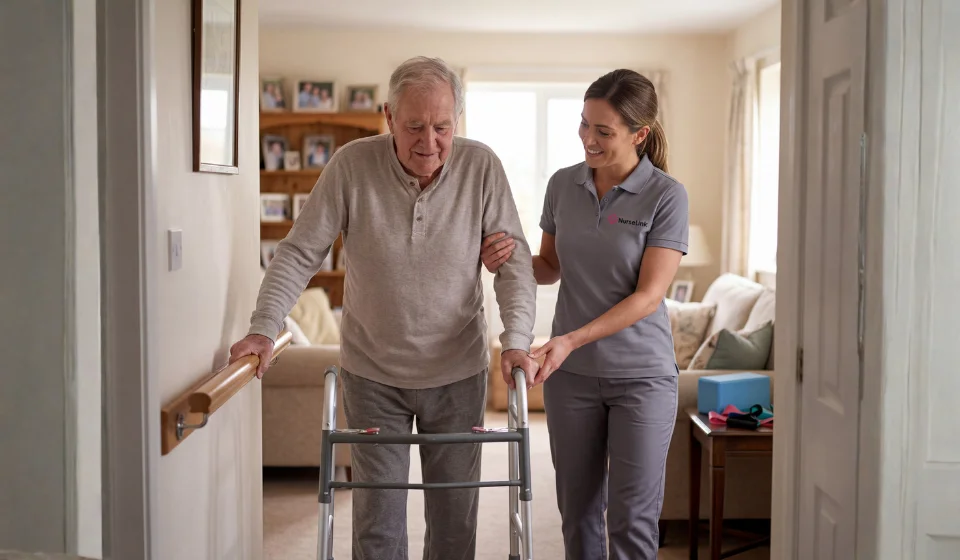
Caring For Dad From Across The Country
Raising Three Kids While Living with Parkinson’s
A Family In Crisis. A Care Team Ready.
Homecare Cleaning Support
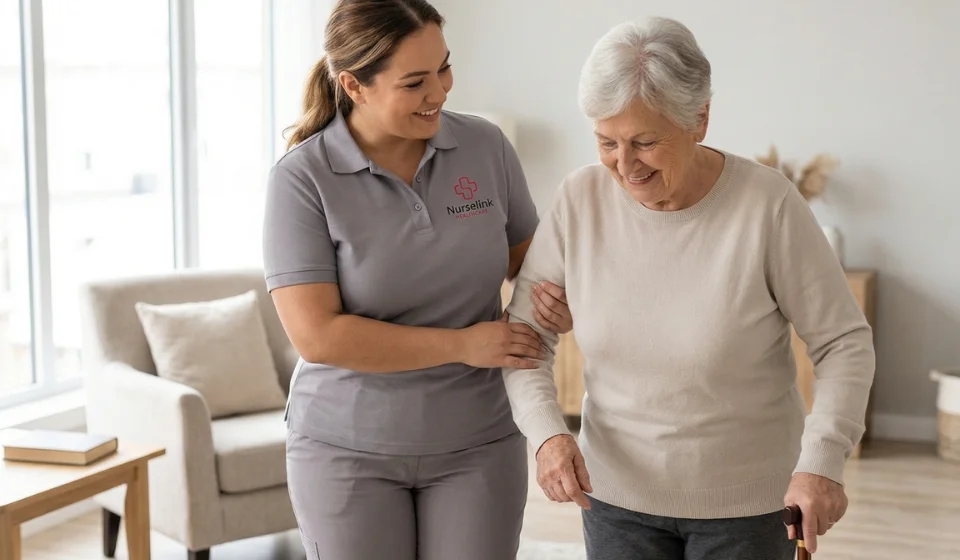
A Journey Of Comfort & Independence Through Homecare Support

Margaret’s Journey