
The Help She Swore She’d Never Need

See How NurseLink's Personal Care Support Let A Ballarat Woman Stay Fiercely, Safely Independent
A Case Study In Home Care That Respected Pride As Much As It Addressed Need
Introduction
For many older people, the hardest part of ageing is not the physical decline itself but what accepting help for it seems to represent. A lifetime of managing independently, raising a family, running a household, making every decision without needing to ask, can make the arrival of personal care support feel less like assistance and more like an ending, a visible marker that something fundamental has changed. This is particularly true for clients who have spent decades defining themselves by their self-sufficiency, for whom a stranger helping them shower or dress can feel less like dignity being preserved and more like it quietly being taken away.
Home care providers understand, or should understand, that this resistance is rarely about the tasks themselves. It is about what the tasks symbolise, and a care arrangement that addresses only the physical need while ignoring the emotional weight of accepting it is one that clients will often, quietly and stubbornly, undermine at every opportunity.
This case study documents how NurseLink Healthcare provided personal care support to a woman in her early eighties in Ballarat, whose fierce independence had, for months, led her to decline help she genuinely needed, and how a carefully considered approach to care finally allowed her to accept support without feeling she had lost anything in doing so.
To protect the privacy of the client, all names and identifying details have been kept confidential throughout this case study.
The Client & Her Situation
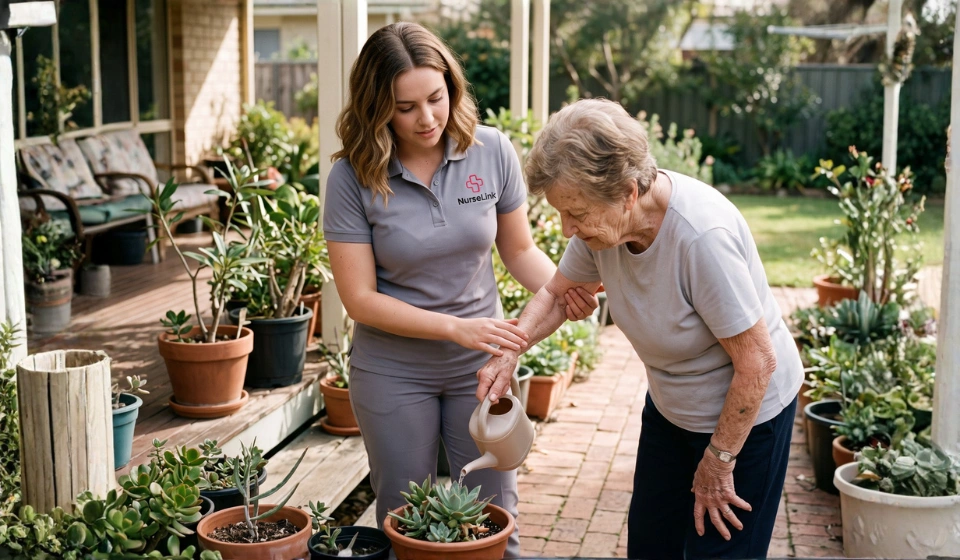
The client is a woman in her early eighties living alone in a modest home in Ballarat that she and her late husband had owned for over fifty years, a widow of four years who had, since his passing, taken visible pride in managing entirely on her own, the garden, the cooking, the household finances, all of it, as a way of proving to herself and to her adult children that she did not need looking after.
Her decline had been gradual enough that she had, by her own admission later, simply adjusted around it rather than acknowledging it. Showering had become slower and more precarious. Dressing, particularly anything requiring her to bend or reach, had become something she managed through workarounds rather than ease. Her daughter, visiting from Melbourne roughly once a month, had noticed bruising on her mother’s arms during one visit that her mother dismissed as nothing, and had, over several months, grown increasingly worried about a fall that had not yet happened but felt, to her, increasingly likely.
A home care package had been arranged through her GP following an assessment, but the client had, in the words of her case manager, treated the first two providers who attempted to deliver personal care support as an insult rather than a help, cancelling visits, insisting she was managing fine, and on one occasion telling a support worker bluntly that she had been washing herself for eighty years and did not need lessons now. By the time NurseLink Healthcare was engaged, her daughter’s concern had become urgent, and the case manager’s referral notes were explicit: this client needs help, but will refuse it if it is delivered in a way that feels like she is being managed rather than respected.
Understanding What She Actually Needed
The initial assessment, conducted by a NurseLink Healthcare care coordinator in the client’s home, made clear within the first conversation that the clinical need, safe assistance with showering, dressing and general personal care to reduce fall risk, was entirely secondary, in terms of what would determine success, to how that assistance was offered and by whom.
She needed physical support with tasks that had become genuinely unsafe for her to manage alone, particularly showering, where her balance had become unreliable enough that a fall was a real and growing risk. But she needed that support delivered in a way that did not require her to feel incapable in order to receive it, an approach that framed the arrangement as assistance she was choosing to accept on her own terms, rather than care being imposed on her because she could no longer be trusted to manage alone.
The coordinator noted, too, that the client responded far more openly to being asked what she wanted than to being told what she needed, and that any worker assigned to her would need genuine patience for a client who might test boundaries, push back on suggestions, and need to arrive at acceptance in her own time rather than being talked into it in a single visit.
Her daughter, present for part of the assessment, added that what she needed most was simply the knowledge that her mother was safe day to day, without the relationship between them becoming defined by her mother’s resentment at being, as she put it, checked up on.
The NurseLink Healthcare Solution
A Support Worker Selected For Patience, Not Just Competence
NurseLink Healthcare assigned a support worker with several years of experience supporting older clients through exactly this kind of resistance, chosen specifically for a manner the coordinator described as unhurried and genuinely respectful, someone who would not take early rebuffs personally and would understand that trust, with this particular client, would need to be earned gradually rather than assumed from day one.
Starting With Choice, Not Assistance
Rather than beginning with the personal care tasks the referral specified, the first visit focused entirely on conversation, the support worker spending nearly the full visit simply talking with the client about her garden and her late husband, and explicitly telling her, before anything else, that nothing would happen in this arrangement that she had not agreed to first. This deliberate slowness, the coordinator later noted, was itself the intervention: showing the client that her control over the process was genuine, not a formality, before ever asking her to accept help with a task she found humiliating to need.
Letting Her Set The Terms Of Her Own Care
Over the following visits, the support worker consistently framed each element of care as the client’s decision rather than the plan’s requirement, asking whether she would like assistance in the shower today rather than announcing that it was time for a wash, and accepting, without argument, on the occasions the client declined. This approach meant several early visits involved far less direct personal care than the referral called for, a trade-off the coordinator judged worthwhile, given that rushing the clinical task risked losing the client’s cooperation with the arrangement altogether.
Building Competence Alongside Trust
As the relationship developed, the support worker began quietly demonstrating small pieces of expertise, safer positioning for getting in and out of the shower, a non-slip mat suggestion offered as a passing comment rather than a directive, that the client began, gradually, to notice and value without ever being asked to formally acknowledge needing them. By the sixth week, she was accepting full showering assistance most visits, framed consistently as help she was choosing rather than supervision she was tolerating.
Keeping Her Daughter Informed Without Undermining Her Mother's Autonomy
The support worker maintained brief, regular updates with the client’s daughter, enough to provide genuine reassurance about her mother’s safety and wellbeing, without ever discussing the details of what the client had or had not agreed to on a given visit, an arrangement that protected the client’s sense of privacy and control while still meeting her daughter’s need for peace of mind.
Outcomes And Impact
She Accepted The Personal Care Support She Had Needed For Months
By the second month of the arrangement, the client was consistently accepting showering and dressing assistance across her scheduled visits, a shift her case manager described as a significant turnaround from a referral history marked by cancelled visits and outright refusal.
Her Fall Risk Was Meaningfully Reduced
With consistent, safe assistance now in place for the tasks that had previously carried the greatest physical risk, her case manager’s subsequent review noted a substantial reduction in her fall risk profile, directly attributable to the personal care support she had finally accepted.
Her Relationship With Her Daughter Improved
Her daughter reported, in a follow-up conversation with the coordinator, that visits home had become noticeably less tense, no longer dominated by circling arguments about accepting help, and had returned to something closer to the relationship they’d had before her mother’s decline began driving a wedge between genuine concern and her mother’s resistance to it.
She Retained Her Sense Of Independence
Perhaps most significantly, the client herself reported feeling more in control of her situation, not less, describing the arrangement as help she had chosen on her own terms rather than something that had been done to her, a distinction that mattered enormously to a woman who had spent months equating any assistance with losing her independence altogether.
She Remained Safely In Her Own Home
By resolving both the physical risk and the emotional resistance that had prevented her from accepting help, the engagement allowed the client to remain safely in the home she had shared with her husband for over fifty years, avoiding the higher-support living arrangement her daughter had quietly begun to fear might otherwise become necessary.
A Reflection From The Client
Toward the end of the engagement’s first few months, she shared the following with the NurseLink Healthcare care coordinator:
She said she had spent months telling everyone, her daughter, her GP, anyone who would listen, that she did not need help, and that most of that was not really about the showering at all, it was about not wanting to feel like the person she had been for eighty years was suddenly gone. What changed things for her was a support worker who never once made her feel like accepting help meant admitting defeat, who let her say no as many times as she needed to before she was ready to say yes, and who treated every visit like it was still her home and her decision, not a job being done to her. She said she still gardens every day, still manages her own finances, still feels like herself, and that the only real difference now is that she is safer doing it, which, she admitted, was probably what everyone had been trying to tell her all along.
Key Takeaways From This Case Study
Resistance to personal care is rarely about the physical task itself. For many older clients, particularly those who have defined themselves through independence, accepting help can feel like losing identity, and addressing that underlying fear is often the real work of a successful care arrangement.
Letting a client set the pace, even when it slows the clinical timeline, often produces better long-term outcomes. Early visits that involved less direct care than the referral specified ultimately built the trust that made full, consistent care possible.
Framing care as the client’s choice, rather than the plan’s requirement, changes how it is received. Simply asking rather than announcing gave this client a genuine sense of control that made acceptance possible on her own terms.
Family reassurance needs to be balanced against the client’s autonomy and privacy. Keeping the daughter informed without disclosing details her mother hadn’t agreed to share protected both relationships simultaneously.
Successful home care can restore independence rather than diminish it. When delivered with genuine patience and respect, personal care support let this client remain exactly who she had always been, only safer.
Conclusion
A woman who had spent months refusing the help she plainly needed, out of a fear that accepting it meant losing herself, found, through patient and genuinely respectful home care, that the opposite was true. For the client at the centre of this case study, NurseLink Healthcare provided not only the safe, consistent personal care her situation required, but the dignity and control that made it possible for her to finally accept it.
She still tends her garden every morning. She still manages her own home, on her own terms. And she is, for the first time in months, genuinely safe while she does it.
If you or someone you love is resisting personal care they may need, we encourage you to reach out to the NurseLink Healthcare team. We are here to support your independence, not take it from you.
Latest Post
The Daughter Who Was Running Out Of Herself
The Help She Swore She’d Never Need
Carrying More Than He Could Carry
More Than Domestic Support
Still Her Home
The Weight She Was Carrying
Caring For Her Without Losing Himself
Managing Diabetes Without Sight
The Recovery Nobody Predicted
Finding Their Footing Again
On His Own Terms
When MS Moves In, The Whole Family Feels It
The Nurse Who Became The Patient
His Land, His Terms
Coming Home Differently
The Caregiver’s Pause
Still Going Home
Where He Belonged
Caring For Dad From Across The Country
Raising Three Kids While Living with Parkinson’s
A Family In Crisis. A Care Team Ready.
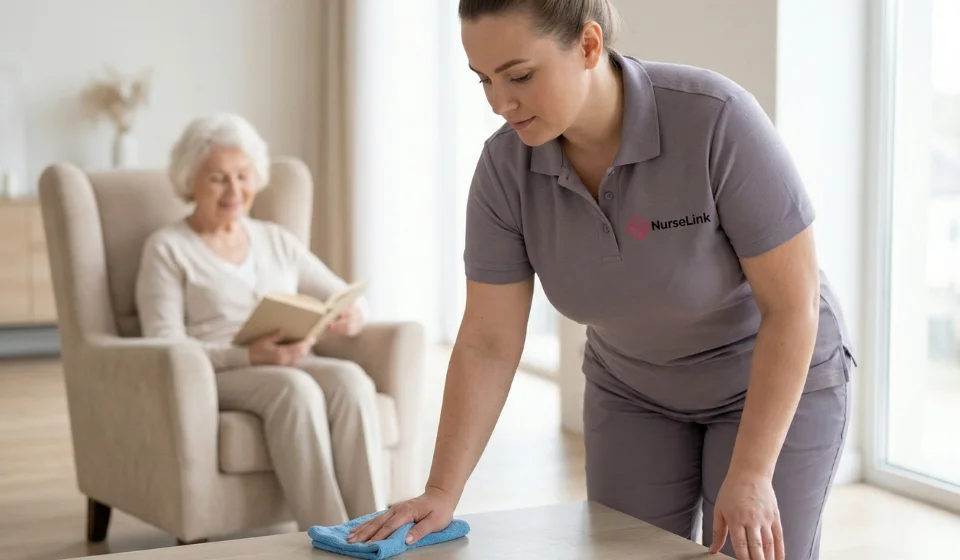
Homecare Cleaning Support
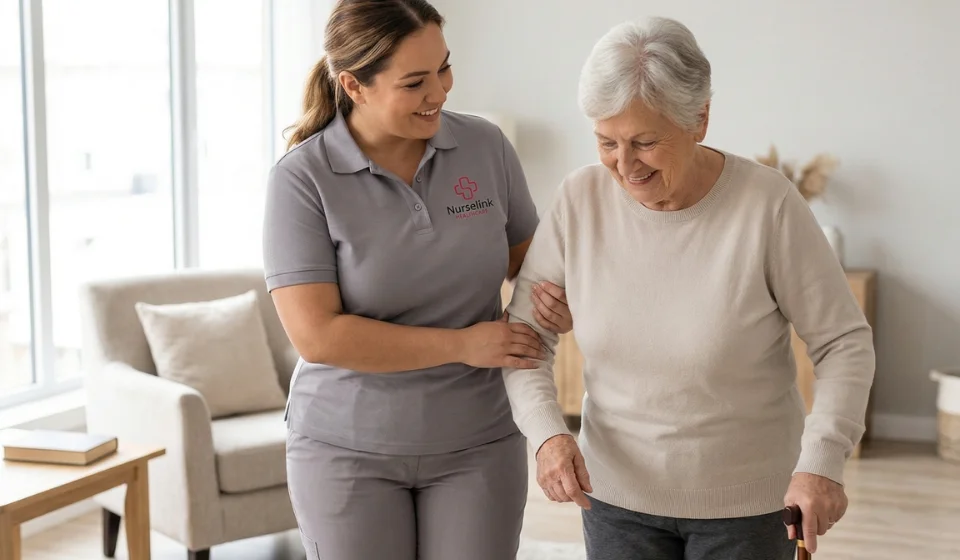
A Journey Of Comfort & Independence Through Homecare Support
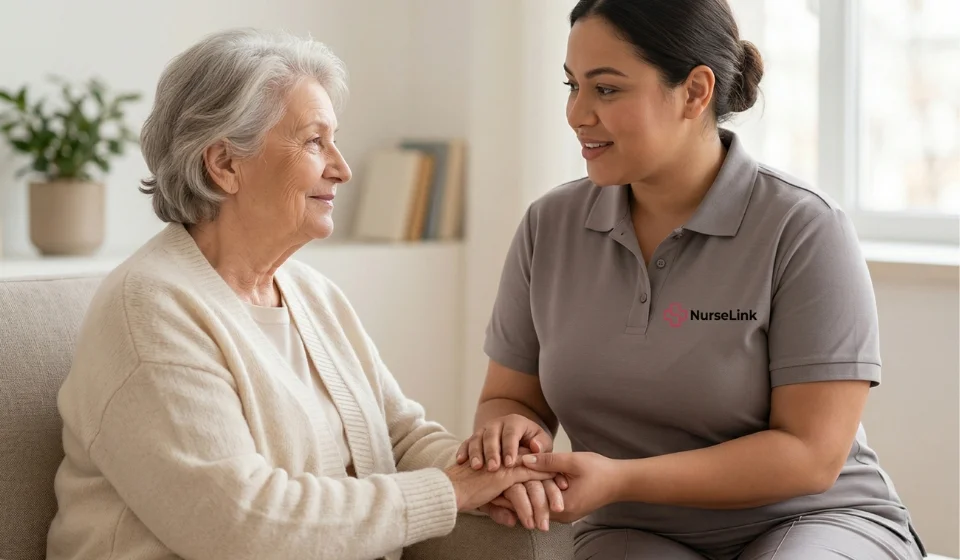
Margaret’s Journey