
The Daughter Who Was Running Out Of Herself
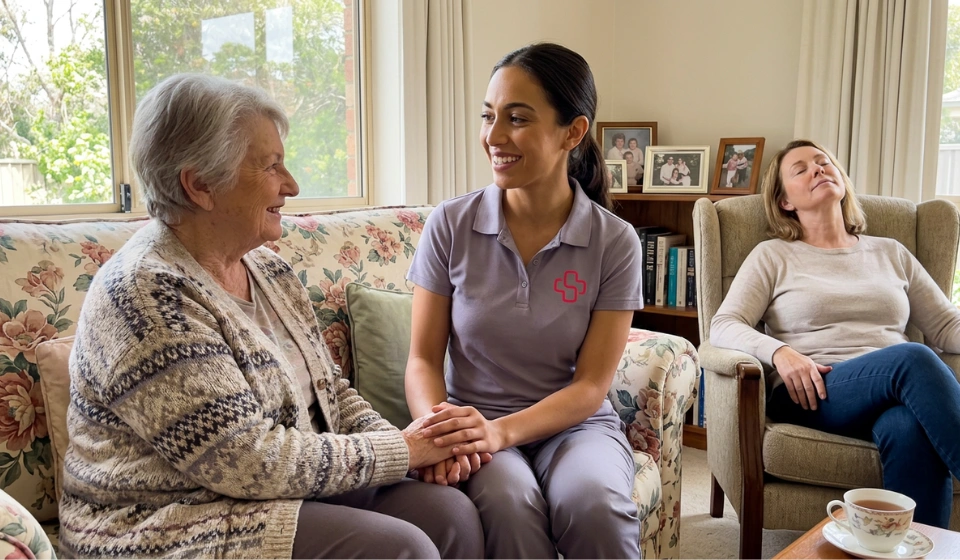
How NurseLink's Homecare Support Let A Woman Care For Both Her Parents Without Disappearing In The Process
A Case Study In Respite That Understood The Carer Was A Client Too
Introduction
When one ageing parent needs support, the path forward, while never simple, is at least reasonably well understood: assess the need, arrange appropriate care, adjust as the situation changes. When both parents need support at the same time, often for different reasons and on different timelines, the situation facing the adult child caught in the middle becomes something considerably harder to plan around. There is rarely a single diagnosis to respond to, rarely a clear moment where outside help becomes obviously necessary, and very often, a carer who has spent so long absorbing the growing need around her that she has stopped noticing what it has cost her to do it.
Sandwich-generation caregiving, an adult child supporting ageing parents while frequently still managing their own household, work and sometimes their own children, is one of the more invisible forms of caregiver strain precisely because it tends to arrive gradually, one small additional responsibility at a time, until the carer’s own life has been almost entirely absorbed into managing everyone else’s. Homecare support that focuses only on the parents’ needs, without recognising the carer’s own exhaustion as a genuine and separate problem, often fails to address what is actually driving the family toward crisis.
This case study documents how NurseLink Healthcare provided homecare support to an elderly couple in Horsham while directly addressing the wellbeing of their adult daughter, who had spent nearly two years managing both her parents’ escalating needs largely alone, and how a support plan built around the whole family, not just the parents, prevented what had been heading toward a genuine breaking point.
To protect the privacy of the client and her family, all names and identifying details have been kept confidential throughout this case study.
The Family & Their Situation
The client family consists of a couple in their early eighties living in Horsham, and their daughter, a woman in her late forties who lived nearby with her own husband and teenage children, and who had, over the preceding two years, become the primary support for both her parents as their needs grew in different directions at roughly the same time.
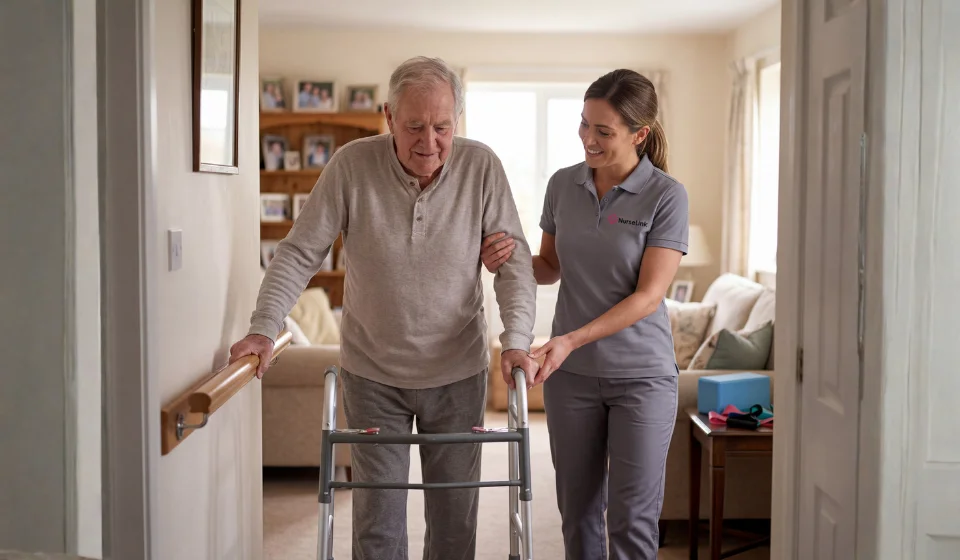
Her father had been managing type 2 diabetes and declining mobility following a hip replacement that had not recovered as well as hoped, requiring increasing assistance with daily tasks and transport to frequent medical appointments. Her mother, meanwhile, had begun showing early signs of cognitive decline, not yet at a stage requiring formal diagnosis or intensive intervention, but enough that she had become anxious and disoriented when left alone for any length of time, increasingly reliant on her husband’s presence even as his own capacity to provide that reassurance diminished.
Their daughter had, without any deliberate decision to do so, become the connective tissue holding the household together, managing her father’s medical appointments, quietly picking up household tasks her mother could no longer reliably manage, and visiting daily, often multiple times, to check that both parents were coping. She had told her GP, during an appointment ostensibly about her own persistent headaches, that she could not remember the last time she had done anything that was just for herself, and that she had started resenting her parents’ needs in moments she was deeply ashamed of afterwards, a confession that prompted her GP to refer the family for a homecare needs assessment that, until that point, no one had thought to request.
Understanding What The Family Actually Needed
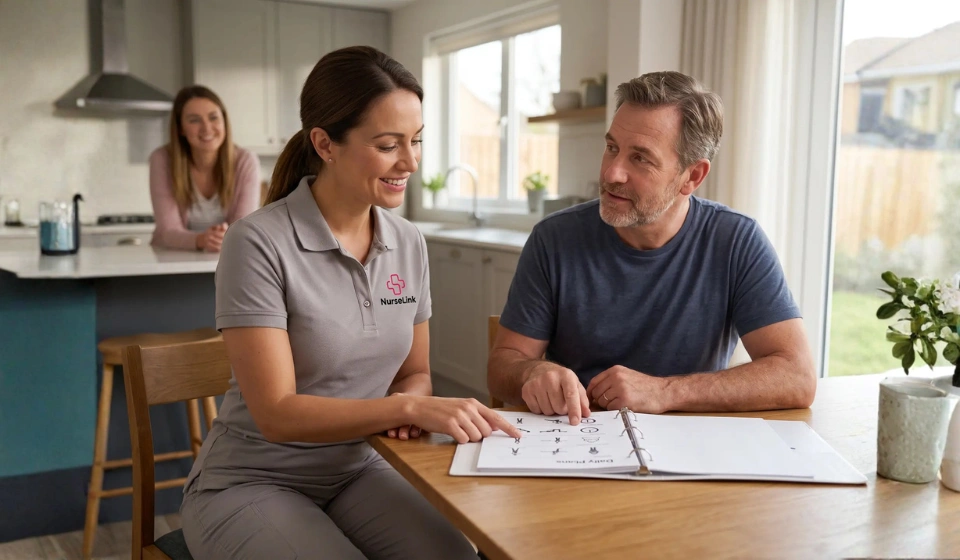
The initial assessment, conducted by a NurseLink Healthcare care coordinator visiting the family home, quickly revealed a situation considerably more layered than the referral’s stated concern about the father’s mobility and diabetes management. Both parents had genuine, distinct care needs, practical support for her father’s daily tasks and appointments, and a safe, engaging presence for her mother during periods when she could not be alone, but the coordinator recognised almost immediately that the family’s most urgent problem was not either parent’s individual need. It was their daughter, whose capacity to keep absorbing responsibility without any support of her own had clearly, quietly, run out.
The family needed a genuinely coordinated homecare plan covering both parents’ distinct needs, structured support for her father’s personal care and appointment transport, and companionship and safety supervision for her mother during the hours her daughter could no longer reasonably cover herself. But the coordinator was explicit, in her assessment notes, that a plan addressing only the parents while leaving their daughter’s exhaustion unaddressed would likely see the family back in crisis within months, regardless of how well the parents themselves were supported.
The daughter, when asked directly what she needed, initially insisted the plan should focus entirely on her parents, a response the coordinator recognised as consistent with a carer who had stopped considering her own needs legitimate at all. It took a second, more direct conversation for her to acknowledge, hesitantly, that she had not had an uninterrupted weekend to herself in over a year, and that she was beginning to worry about what continuing at this pace was doing to her own family.
The NurseLink Healthcare Solution
A Genuinely Coordinated Plan Across Two Distinct Needs
NurseLink Healthcare structured a homecare plan addressing both parents’ needs as connected but distinct, regular personal care and appointment support for her father, and separate, dedicated companionship support for her mother during set hours each week, rather than a single generic care visit expected to cover both parents’ quite different requirements simultaneously.
A Support Worker Matched To Her Mother's Specific Needs
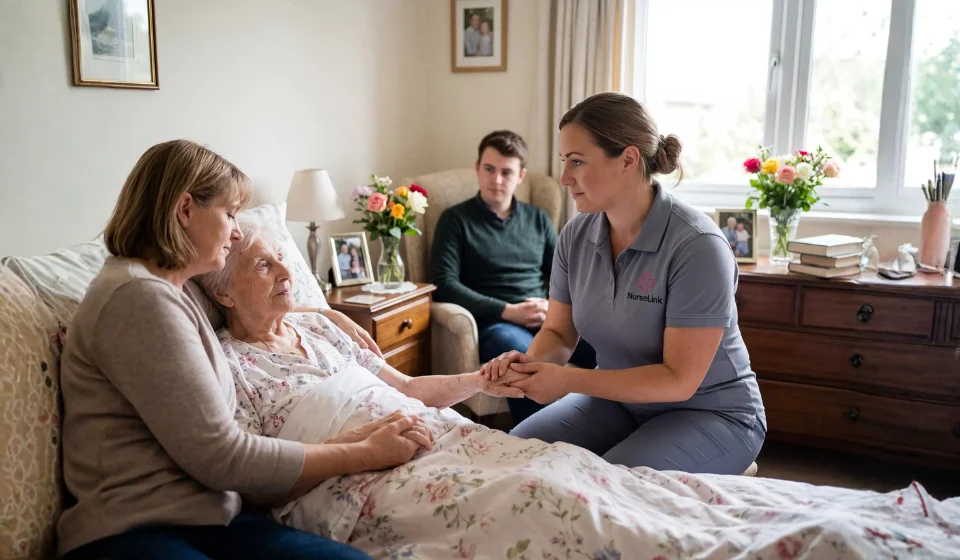
Given her mother’s early cognitive changes and anxiety when alone, the assigned support worker was selected specifically for experience with early-stage cognitive decline, someone comfortable providing calm, reassuring companionship and gentle engagement rather than clinical caregiving, allowing her mother genuine comfort during the hours her daughter was previously the only person able to provide it.
Naming The Daughter's Needs As Part Of The Plan, Not An Afterthought
The care coordinator worked directly with the daughter to build guaranteed respite time into the formal support schedule, not as leftover hours once her parents’ care was arranged, but as a deliberate, protected component of the plan itself, framed explicitly as necessary to the family’s overall wellbeing rather than an indulgence she needed to justify.
Building A Schedule That Actually Freed Her, Not Just Reassigned Tasks
Rather than simply adding support hours around her existing routine, the coordinator worked with her to identify specific blocks of time, initially a few hours weekly, gradually extended to occasional full weekends, where support coverage was reliable enough that she could genuinely step away without needing to remain contactable for every small decision, restoring something closer to actual rest rather than simply relocated responsibility.
Checking In On Her, Not Just Her Parents
The care coordinator maintained periodic direct contact with the daughter herself throughout the engagement, asking specifically how she was coping rather than only reviewing her parents’ progress, a small but consistent practice that gave her permission, gradually, to acknowledge her own exhaustion honestly rather than continuing to minimise it.
Outcomes And Impact
Both Parents' Care Needs Were Reliably Met
Her father’s personal care and appointment transport became consistent and dependable, while her mother received regular, appropriately matched companionship support during the hours she had previously spent anxious and alone, both parents’ wellbeing measurably more stable within weeks of the plan’s implementation.
The Daughter Reclaimed Genuine Time For Herself
Within two months, she was taking regular respite time she trusted enough to actually use, including her first full weekend away with her husband in over a year, a change she described to the coordinator as feeling almost unfamiliar after so long without it.
Her Own Health Concerns Began To Ease
At a follow-up appointment several months into the engagement, her GP noted a meaningful reduction in the tension headaches that had originally prompted the referral, attributing the change directly to the reduction in chronic stress the homecare support had allowed.
Her Relationship With Her Parents Improved
She reported to the coordinator that her visits to her parents had begun to feel like visits again, rather than shift work, describing conversations with her mother that were no longer overshadowed by her own exhaustion and a sense of connection with her father she felt she had been too depleted to fully offer for some time.
Her Own Family Life Stabilised
Her husband, present for a later review meeting, noted that their household had noticeably calmed, and that their teenage children had commented on their mother seeming, in their words, more like herself again, changes he attributed directly to her no longer carrying her parents’ care almost entirely alone.
A Reflection From The Daughter
Several months into the engagement, she shared the following with the NurseLink Healthcare care coordinator:
She said that for nearly two years, she had genuinely believed that asking for help meant she wasn’t managing, and that some part of her equated her own exhaustion with failing her parents rather than seeing it as a sign that the situation itself had simply become too much for one person. What changed things for her was a coordinator who kept asking how she was doing, not just her parents, and who built her own time off into the plan as something expected rather than something she had to fight for or feel guilty about taking. She said the weekend away with her husband was the first time in longer than she could remember that she felt like a wife and not just a daughter managing a crisis, and that coming home afterwards, she had more patience and warmth for her parents than she’d had in months. She said she wishes someone had told her, much earlier, that getting support for herself wasn’t a betrayal of her parents’ needs, it was what let her keep showing up for them properly at all.
Key Takeaways From This Case Study
Sandwich-generation caregiving strain often hides behind a referral about someone else’s needs. This family’s initial concern was framed entirely around the father’s mobility, yet the daughter’s unaddressed exhaustion was the more urgent underlying issue.
A homecare plan addressing only the ageing parents, while ignoring the adult child coordinating their care, frequently fails to prevent family crisis. Genuine stability required treating the daughter’s wellbeing as a legitimate part of the care plan itself.
Guaranteed, protected respite time works better than informally offered support. Building specific, reliable blocks of coverage into the formal schedule gave her permission to actually use the time, rather than remaining contactable out of habit or guilt.
Carers frequently need explicit permission to acknowledge their own needs. Direct, repeated check-ins from the coordinator helped this daughter recognise her exhaustion as legitimate, something she had been unable to admit to herself unprompted.
Supporting the carer improves outcomes for the people being cared for, not just the carer herself. Both parents’ relationships with their daughter measurably improved once she was no longer running on empty.
Conclusion
A daughter who had spent nearly two years quietly disappearing into the needs of both her parents found, through a homecare plan that treated her own exhaustion as seriously as her parents’ care requirements, that she did not have to choose between supporting her family and having a life of her own. For the family at the centre of this case study, NurseLink Healthcare provided not only reliable, well-matched support for two ageing parents with distinct and separate needs, but the recognition that their daughter’s wellbeing was never separate from the family’s wellbeing as a whole.
Her parents are well supported. Her own health has genuinely improved. And for the first time in years, she is showing up for her family as herself, rather than as someone running on whatever was left over.
If you are supporting ageing parents while trying to hold onto the rest of your own life, we encourage you to reach out to the NurseLink Healthcare team. We are here to support your whole family, including you.
Latest Post
The Daughter Who Was Running Out Of Herself

The Help She Swore She’d Never Need
Carrying More Than He Could Carry
More Than Domestic Support
Still Her Home

The Weight She Was Carrying

Caring For Her Without Losing Himself
Managing Diabetes Without Sight
The Recovery Nobody Predicted
Finding Their Footing Again
On His Own Terms
When MS Moves In, The Whole Family Feels It
The Nurse Who Became The Patient
His Land, His Terms
Coming Home Differently

The Caregiver’s Pause
Still Going Home
Where He Belonged
Caring For Dad From Across The Country

Raising Three Kids While Living with Parkinson’s
A Family In Crisis. A Care Team Ready.
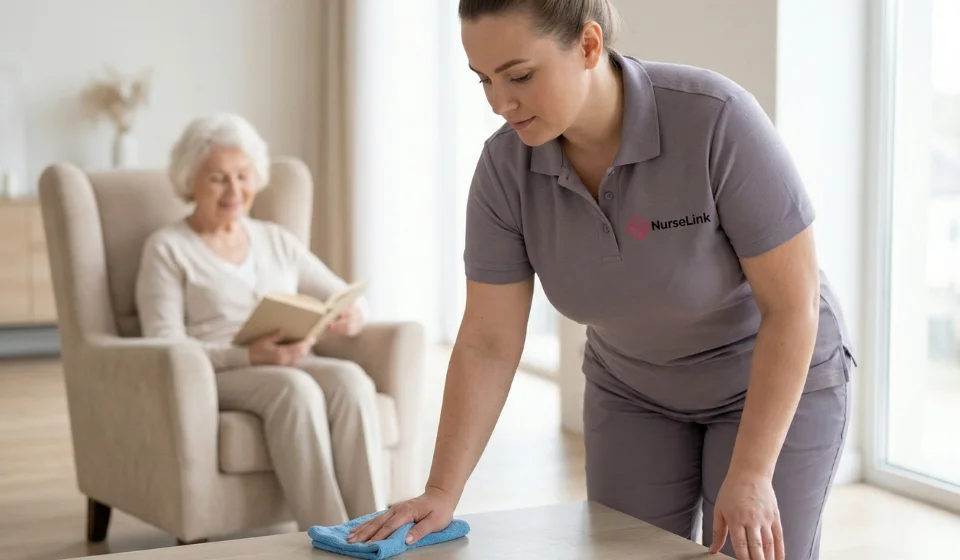
Homecare Cleaning Support
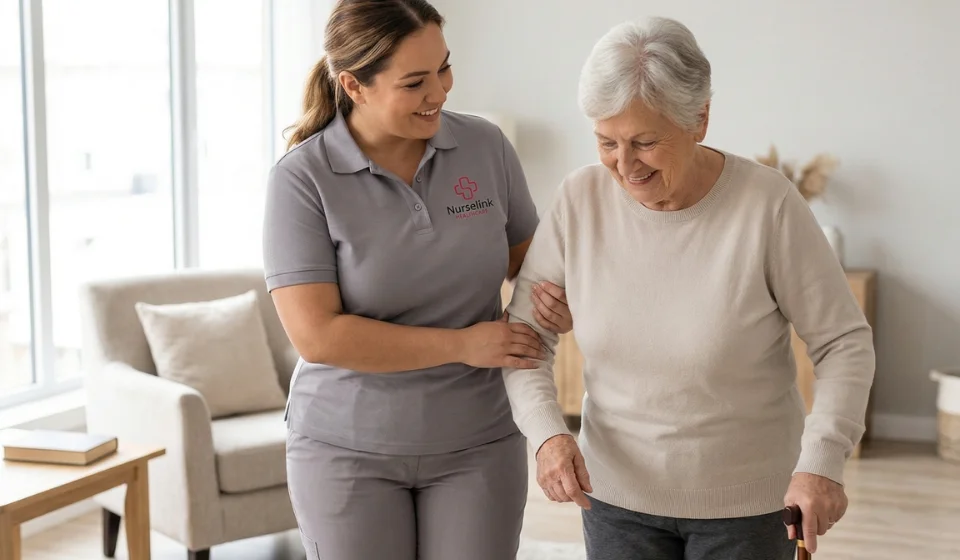
A Journey Of Comfort & Independence Through Homecare Support

Margaret’s Journey