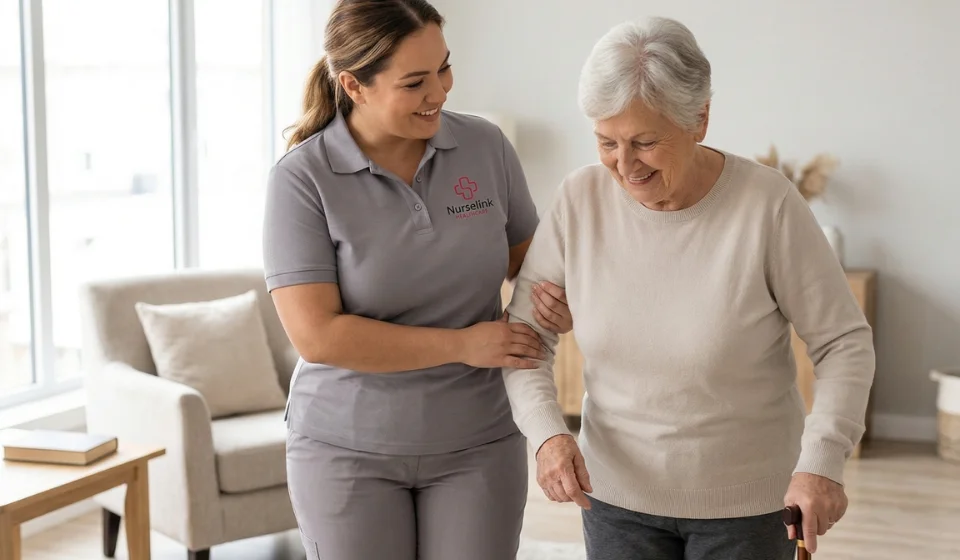
How NurseLink Healthcare's Homecare Helped A Colac Family Keep Their Father Independent As His Sight Faded
A Case Study In Home Support That Rebuilt Familiar Routines Around A Changing World
Introduction
Vision loss in later life rarely arrives all at once. It tends to be a slow narrowing, a series of small adjustments that a person makes almost without noticing until the day they realise how much of daily life has quietly become difficult. Reading a label, finding a switch, recognising a face across a room, each of these slips away gradually, and each is met with a workaround, a bit more light, a bit more care, a bit more reliance on someone else.
For the family around a person losing their sight, the experience is often one of growing, unspoken anxiety. They notice the near misses, the spilled cups, the missed steps. They begin to wonder how long things can continue as they are, and whether the answer is a conversation they are not ready to have. The fear, usually, is not about vision loss itself but about what it might mean for where their loved one can live, and how much of his independence he will be able to keep.
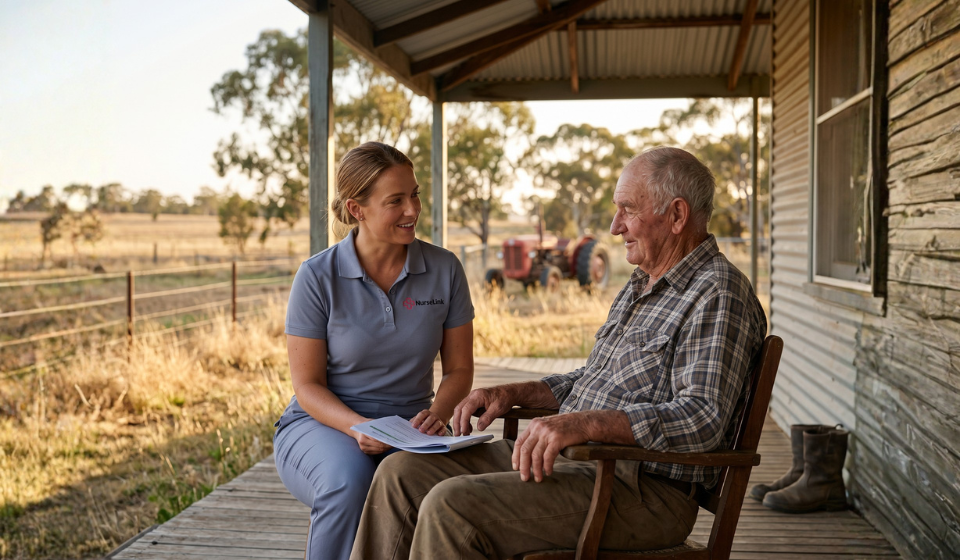
Good homecare for a person with declining vision understands that independence is not preserved by doing things for him. It is preserved by rebuilding the home and its routines so that he can keep doing things for himself, safely and with confidence. This case study documents how NurseLink Healthcare supported a family in Colac whose father, a retired dairy farmer in his late seventies, was losing his sight to age-related macular degeneration, and how a thoughtful, practical approach to homecare helped him remain in the home he loved and the family stop bracing for a move that never needed to happen.
To protect the privacy of the client and his family, all names and identifying details have been kept confidential throughout this case study.
The Family & Their Situation
The client family consists of a man in his late seventies and his wife, in her mid-seventies, living in the house in Colac where they had raised their children after leaving the family dairy farm, and their adult daughter, who lived in Geelong, about an hour away, and visited most weekends. A son lived interstate and phoned regularly.
The father had been diagnosed with age-related macular degeneration several years earlier, and over the past eighteen months his central vision had deteriorated noticeably. He could still see shapes and light, and his peripheral vision remained, but reading, recognising faces and judging steps had become difficult. A specialist had been honest with the family that his sight was unlikely to improve, and the question was how well he would adapt.
He had always been the practical one in the household, a man who fixed things, grew most of the vegetables and took pride in a tidy shed. The change was hard on him. He had stopped reading the paper, a daily ritual of fifty years. He had given up driving, which had hit him harder than he admitted. And in recent months, his wife had noticed that he had begun hovering in doorways and moving cautiously through rooms he had walked for decades.
His daughter had noticed, during a weekend visit, that the kitchen, once his wife’s domain and, increasingly, his own for early morning tea, had become a source of small accidents. A pot left on a lit burner. A tablet bottle mistaken for another. A near fall on the back step. She raised the idea of a retirement village, and the conversation that followed was, in her words, the worst her family had had in years.
Understanding What The Family Actually Needed
When the family approached NurseLink Healthcare, the stated request was modest: a few hours of help each week with housework, shopping and the tasks that had become difficult. But in the first visit, the care coordinator listened closely to how each family member described the situation and recognised that the real need was both more practical and more emotional than the request suggested.
The father needed to feel capable. He did not want to be helped, he wanted to keep doing what he could, and to find ways of doing the things he had stopped doing. He needed practical adaptations to his home and routines that would let him move through his own house with confidence, and a support worker who understood that the goal was to make him more independent, not less.
His wife, who was herself slowing down and increasingly anxious about his safety, needed relief from the constant quiet vigilance of watching him move around the house. She also needed to feel that the arrangement did not take over her role in the home or diminish her husband in front of her.
Their daughter needed evidence, concrete and visible, that her father could remain safely at home, so that she could stop imagining the worst whenever she drove away on Sunday evenings. All three needed the same thing underneath: a plan that treated his vision loss as something to adapt to, not something to surrender to.
The NurseLink Healthcare Solution
A Support Worker With Experience In Vision Loss & Practical Adaptation
NurseLink Healthcare assigned a support worker with specific experience supporting older people with vision impairment, chosen for patience and a practical, no-fuss manner. The coordinator judged that a man who valued competence and self-reliance would respond best to someone who treated adaptation as problem-solving rather than as a sign of decline.
A Home Walk-Through Done With Him, Not Around Him
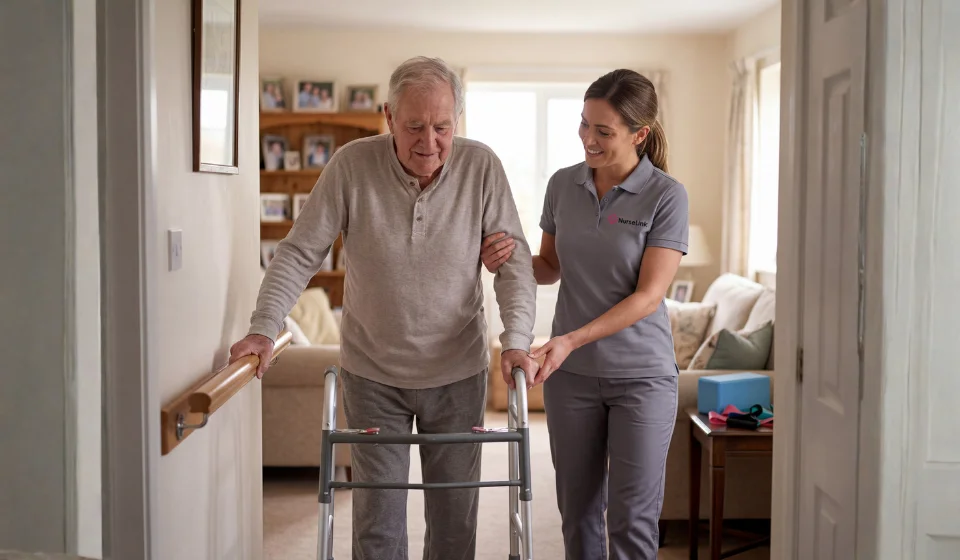
The first visit was a slow walk through the house with the client leading and the support worker alongside, asking him which rooms and tasks gave him trouble and which did not. This simple choice, to ask him rather than assess him, set the tone for the entire arrangement. By the end of the walk-through, the client himself had identified most of the changes that would help.
Practical Changes That Rebuilt Familiar Routines
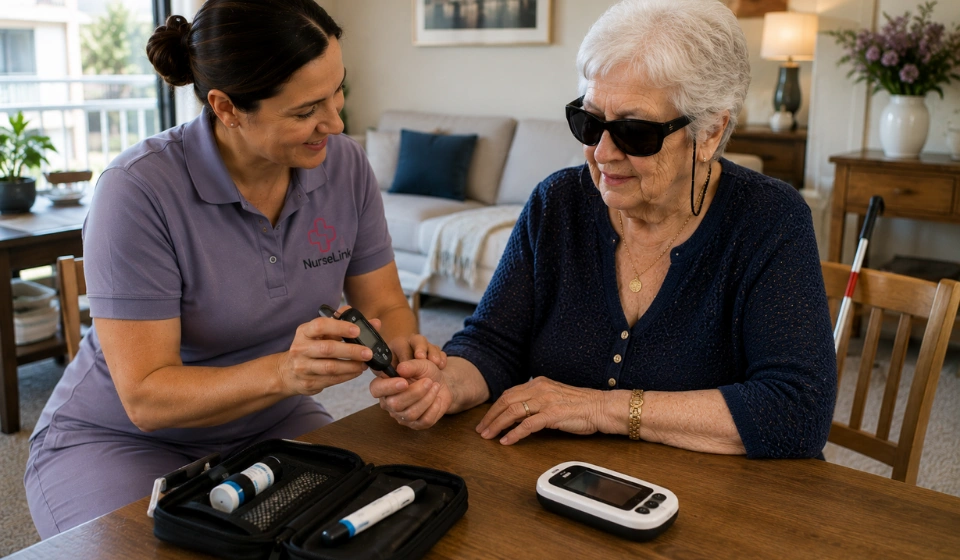
Working with the client, and in consultation with specialist vision services his family had been referred to, the support worker helped introduce a series of simple adaptations. High-contrast tape was placed on the edges of steps. Bright tactile markers were added to the oven and microwave controls. Medications were reorganised into a clearly labelled system the client could identify by touch and by routine. Lighting was improved in the kitchen and hallway, and frequently used items were given consistent, memorable places.
Rebuilding Confidence In The Kitchen
The kitchen was the place where the client felt his loss most keenly, and the support worker approached it as a skills session rather than a service. Together they practised making tea, preparing breakfast and using the stove safely with the new markers in place. Within a few weeks, he was making his own morning tea and breakfast again, an achievement he reported with understated pride.
Keeping Him Outdoors & Active
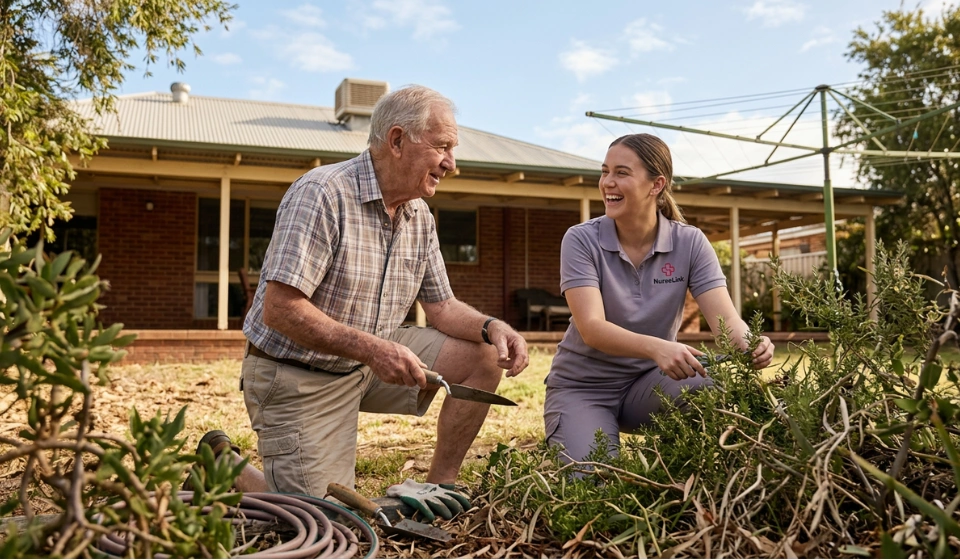
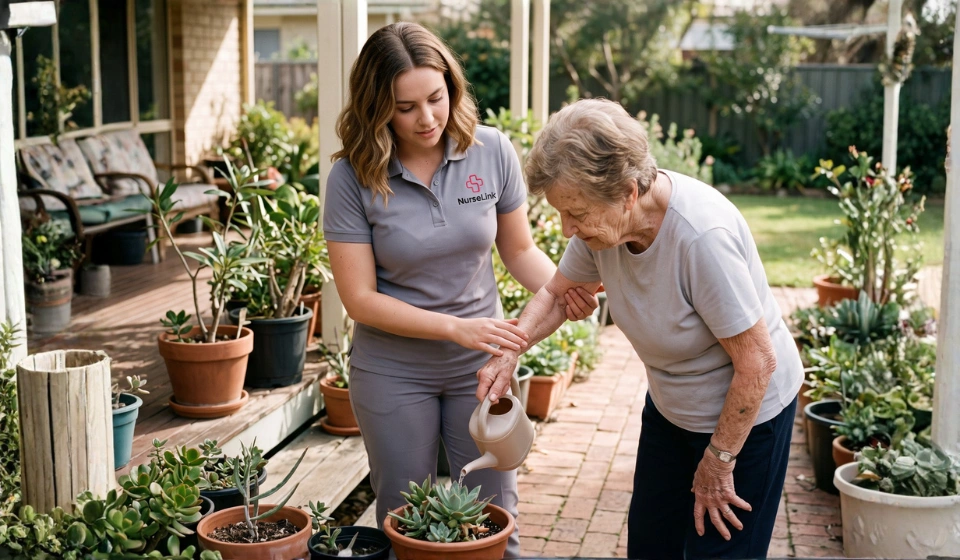
The client’s garden had been a source of daily satisfaction, and the support worker helped him keep it. She accompanied him on walks around the yard until the route was familiar again, helped mark a safe path to the vegetable beds and assisted with the heavier tasks, while leaving him in charge of the planting and the decisions. The garden, which the family had half expected him to abandon, remained his.
Involving The Whole Family Without Taking Over
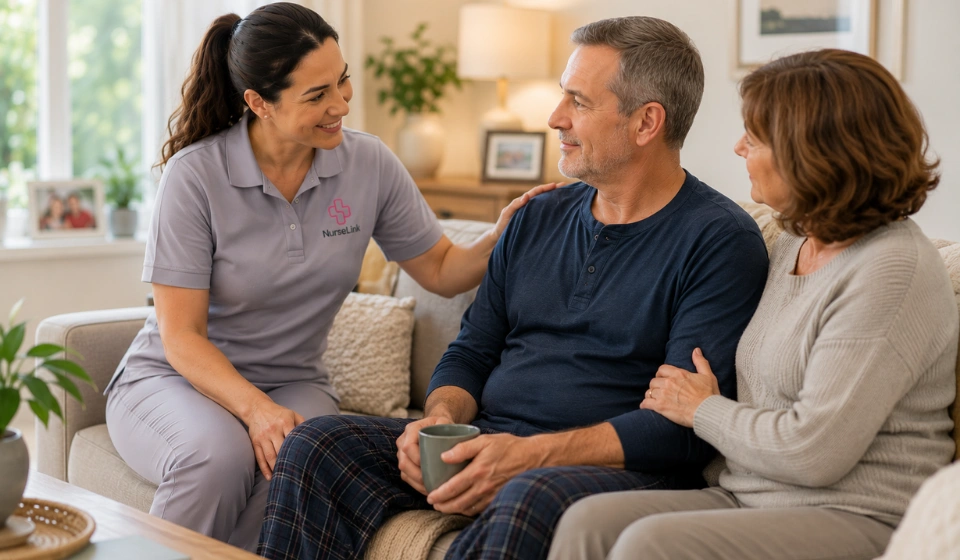
The coordinator kept the family informed through regular, brief updates, and encouraged the daughter to see the adaptations in person on her weekend visits. His wife was included in every planning conversation, and the support worker was careful to work with her routines rather than around them, so that the home continued to feel like theirs.
Outcomes And Impact
He Regained Independence In The Tasks That Mattered Most To Him
Within two months, the client was making his own breakfast, taking his own medication from a system he could manage, moving confidently through the house and tending his garden, a pattern that had seemed unlikely when his daughter first raised the possibility of a move.
The Risk Of Accidents Fell Noticeably
The near falls and kitchen mishaps that had worried the family largely stopped. The practical adaptations reduced the everyday hazards that had been quietly accumulating, and the family felt, for the first time in months, that the house was working for him again.
His Wife Could Finally Relax Around Him
His wife told the coordinator that she had not realised how tightly she had been holding herself until she stopped watching him walk through every doorway. She described feeling like a wife again rather than a lookout.
His Daughter's Fear Eased
His daughter, who had begun to dread the drive home on Sunday evenings, reported that seeing her father move through the house with confidence had changed how she thought about the next few years. The conversation about a retirement village was set aside, and she described it as a weight lifted.
He Stayed In The Home He Loved
By addressing the practical causes of the family’s fears, the arrangement allowed him to remain in the home where he and his wife had spent decades, keeping his routines, his garden and his dignity intact.
A Reflection From The Client's Daughter
Several months into the arrangement, the client’s daughter shared the following with the NurseLink Healthcare care coordinator:
She said that when she first raised the idea of a retirement village, she had genuinely believed she was being sensible, and that the way her father looked at her that day had stayed with her ever since. What changed things for her was a support worker who did not treat her father as a problem to be managed, but as a capable man whose world had changed and who needed a few practical tools to keep running it. She said the first time she saw him make tea at the stove without hesitation, using the little markers he had helped choose, she had to step out of the kitchen for a moment. She added that she had been so focused on what her father was losing that she had not considered what he could still do, and that the biggest change in the family was not the tape on the steps or the labels on the tablets, but the sense that her father was still in charge of his own life.
Key Takeaways From This Case Study
Vision loss in later life is usually gradual, and families often notice the risks before the person does. Recognising the pattern early allows practical adaptations to be made before an accident forces a harder conversation.
Independence is preserved by adapting the home and routines, not by taking tasks over. Simple changes, such as tactile markers, contrast tape and consistent placement of items, allowed this client to keep doing things for himself.
Asking the client to lead the assessment changes the entire dynamic. Walking through the house with him, rather than around him, helped him identify his own priorities and kept him in charge of the plan.
Family fear is often about what vision loss will mean for where a person can live. Showing the family concrete evidence of safety and capability eased the pressure for a move that was not needed.
Support that includes the whole household works better than support focused on one person. Involving his wife and keeping the family informed made the arrangement feel like a shared project rather than an intervention.
Conclusion
A man whose sight was fading and a family bracing for what that might mean found, through thoughtful and practical homecare, that independence did not have to be one of the things he lost. For the family at the centre of this case study, NurseLink Healthcare provided not only reliable support, but a way of seeing vision loss as something a household could adapt to together.
He makes his own tea again. His garden is still his. And a Colac family has stopped asking how long things can go on as they are, because they are.
If someone you love is losing their sight and you are worried about what comes next, we encourage you to reach out to the NurseLink Healthcare team. We help families adapt the home, not give it up.