
The Man Who Still Went To Work Every Morning
How NurseLink's Dementia Homecare Helped A Benalla Family Keep Their Husband & Father Safe
A Case Study In Home Support That Built Care Around A Lifetime Of Routine, Not Around The Diagnosis
Introduction
When someone is diagnosed with dementia, the conversation that follows is usually about loss: of memory, of independence, of the person as they were. Families are given information about the progression of the condition, the likelihood that care needs will increase and, sooner or later, the question of whether the person can continue to live at home. It is a heavy conversation, and it often leaves families feeling that the only available path runs in one direction.
But experienced dementia carers know that this is not the whole picture. A person living with dementia is still a person with a history, with habits and preferences that run deep, with routines that were laid down over decades and often outlast more recent memories. A well-designed care arrangement does not simply manage symptoms. It draws on that history, using the structure and meaning of a person’s life to keep them settled, engaged and as much themselves as possible for as long as possible.
This approach matters most at home, where the surroundings carry their own memory. It also matters for families, who are often grieving the person they are still living with and frightened of making decisions they cannot undo. This case study documents how NurseLink Healthcare supported a family in Benalla whose husband and father, a retired stock agent in his late seventies, was living with Alzheimer’s disease, and how a care plan built around his working life, rather than around his diagnosis, helped him remain safely and contentedly at home while giving his family the confidence to keep him there.
To protect the privacy of the client and his family, all names and identifying details have been kept confidential throughout this case study.
The Family & Their Situation
The family consists of a man in his late seventies, his wife of more than fifty years, who was in her mid-seventies, and their two adult children. Their daughter lived in Melbourne, about two hours away, and visited most weekends. Their son lived on a property outside Benalla and was in regular contact.
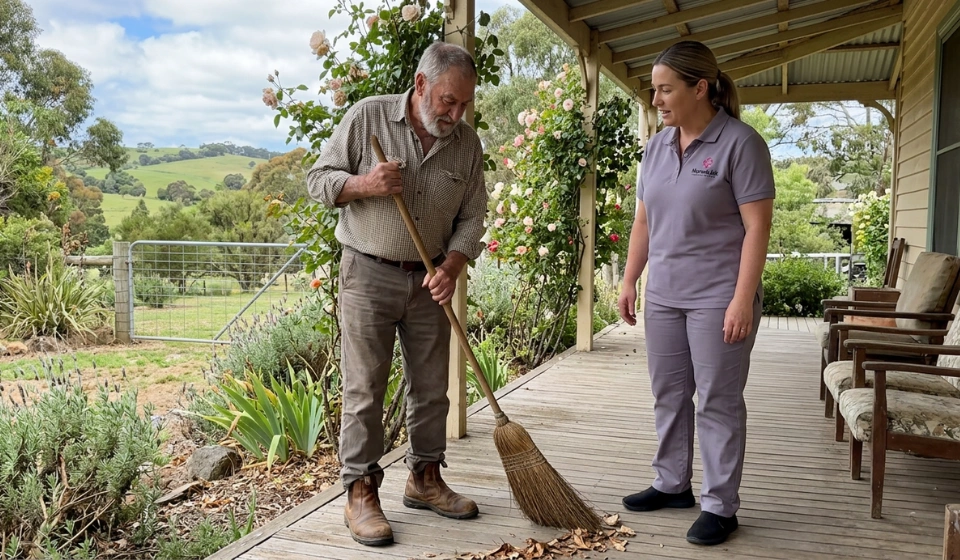
The client had spent his working life as a stock agent, a role that had taken him to saleyards and farms across north-eastern Victoria. He was, by every family account, a sociable, routine-loving man who rose before dawn, knew everyone in town and treated each day as a working one. Even in retirement, he had kept the habit of getting up early, putting on a collared shirt and boots and heading out to see what needed doing.
About three years earlier, his family had begun to notice changes. He repeated stories, lost his way on roads he had driven for decades and became unusually irritable when plans changed. After a period of assessment, he was diagnosed with Alzheimer’s disease. His GP and a regional memory clinic had been supportive, and the family had been connected with information and local services. But by the time they contacted NurseLink Healthcare, the situation at home had become increasingly difficult.
His wife had been managing largely alone. The client had begun waking at three or four in the morning, convinced he was late for work, dressing and trying to leave the house. On two occasions he had gone out into the street before his wife woke. In the late afternoons, he became agitated and restless, pacing the house and asking where everyone was. He had also begun to resist help with basic tasks, becoming angry when his wife tried to assist with showering or reminded him about medication.
His wife, who had always been fiercely capable, was struggling to admit how hard it had become. She described the situation to the NurseLink Healthcare coordinator as manageable, and then, a few minutes later, described the nights. Their son privately told the coordinator that he had begun to wonder whether it was time to start looking at residential care, and that the thought made him feel sick.
Understanding What The Family Actually Needed
When the coordinator visited the home, she spent the first hour not assessing but listening, to the client, who talked at length about the saleyards, and to the family, who described the pattern of their days. What emerged was a clear picture. The client’s behaviour was not random. Each of the difficulties the family described was connected, in some way, to his working life: the early waking, the urge to leave the house, the restlessness in the late afternoon when, for fifty years, he had been finishing his working day.
The client needed a care arrangement that respected that history. He needed structure that gave his days shape and purpose, activities that connected to the person he had been, and support that did not remove his sense of competence. He needed carers who understood how to communicate with a person living with dementia, who would redirect rather than correct, and who would be consistent enough to become familiar.
His wife needed something more nuanced. She needed practical help, but she also needed to keep her place in the household, and not to feel that her husband was being taken over by strangers. She needed to be able to rest without worrying about what would happen if she did, and to feel that her own knowledge of her husband was valued.
Their son and daughter needed information and reassurance. They needed to understand what they were seeing, to feel that the arrangement was safe and sustainable, and to be able to trust that if things changed, they would be told promptly and honestly. They needed to feel that keeping their father at home was a reasonable, achievable goal rather than a refusal to face reality.
The NurseLink Healthcare Solution
A Small, Consistent Team With Dementia Experience
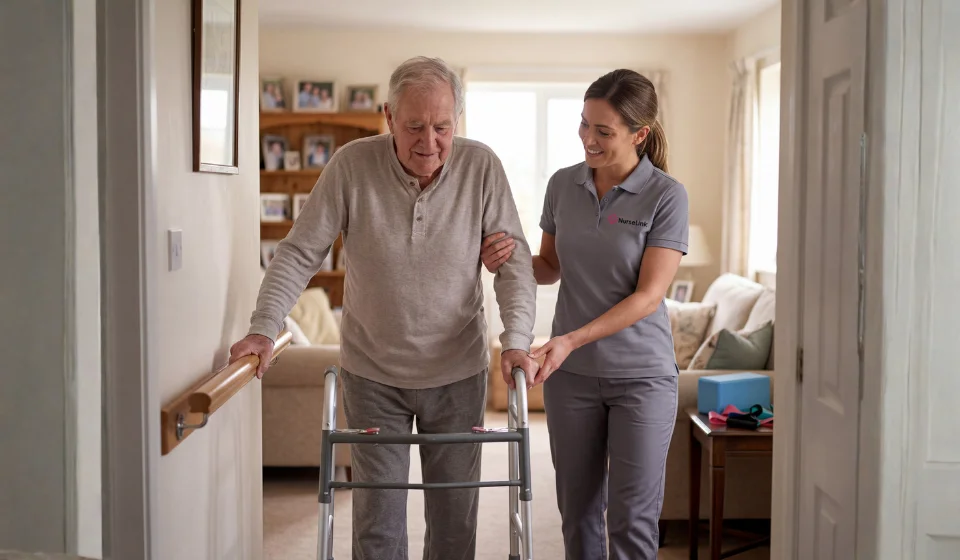
NurseLink Healthcare assigned two support workers with specific dementia care experience, working in a predictable rota so that the client would come to know them well. The coordinator judged that consistency was the single most important feature of the arrangement, because familiarity is one of the few things that reliably reduces anxiety in people living with dementia.
Building The Care Plan From His Life Story
Before the first shift, the coordinator and the family completed a detailed life story, covering the client’s career, his routines, his favourite places, his friends, his sense of humour, the foods he liked and the things that annoyed him. This document went well beyond clinical notes. It told the support workers that he took his tea black, that he disliked being rushed, that he liked to know the weather and that he had never, in his life, asked for help if he could avoid it.
Giving His Mornings A Purpose
Recognising that his early waking and desire to leave the house came from decades of working life, the support workers helped create a morning routine that gave him something meaningful to do. He was invited to check the weather, to walk the garden perimeter and to carry out small, familiar jobs, sweeping the verandah, checking the gate, feeding the birds, that could be done safely and satisfied his sense of having a day’s work to do. The workers addressed him with the respect he had always commanded, and often asked his advice about practical matters.
Managing The Difficult Hours With Understanding
For the late afternoon agitation, the support workers developed a gentle routine. They shifted the day’s main activities to the earlier hours, reduced noise and stimulation as the afternoon went on, and used familiar music and conversation about his working life to settle him. When he asked about being late or needing to be somewhere, they did not correct him, but joined him in the story and gently redirected, saying things like that the day’s work was done and it was time for a cup of tea.
Keeping Him Safe Without Making Him Feel Contained
The coordinator worked with the family to make practical changes to the home. A discreet chime was added to the front door, safe walking routes were set up in the garden, and a simple system was put in place for the household’s keys. The aim was to reduce risk without removing his freedom of movement, so that he could walk and potter without feeling watched. His family also registered him with local safety programs and made sure that neighbours who knew him were aware, in a general way, that he might occasionally wander.
Preserving Dignity In Personal Care
The client had resisted help with showering, and the support workers approached it carefully. Rather than announcing that it was time for a shower, they incorporated it into his routine, after a morning walk, with warm towels ready and familiar music playing, and allowed him to do as much as he could for himself. They worked at his pace and made sure he never felt exposed or hurried. Over several weeks, the daily struggle that had been wearing down his wife became a calm, manageable part of the morning.
Supporting His Wife As An Expert, Not An Assistant
The coordinator treated his wife as the person who knew her husband best. She shared what she had learned over fifty years and the support workers listened, adapting their approach to hers. She was also given regular time to herself, and the arrangement was structured so that she could take a morning to see friends or rest without worry. Over time, she described feeling that she had her husband back, rather than a patient to manage.
Keeping The Family Informed & Prepared
The coordinator kept in regular contact with the client’s son and daughter, providing updates on how their father was doing, explaining what the support workers were observing and discussing what changes might be expected over time. She also helped the family connect with local dementia support services and, with their agreement, kept the client’s GP and memory clinic informed of any changes. The family was given a clear picture of what the support arrangement could and could not do, and of the signs that might suggest a need to revisit the plan.
Outcomes And Impact
His Nights & Early Mornings Became Calmer
Within several weeks of beginning the new routine, the client’s pattern of waking in the early hours and trying to leave the house eased noticeably. Having a purposeful morning to look forward to seemed to settle something in him, and his wife began sleeping through the night for the first time in months.
His Afternoons Became More Peaceful
The restlessness and agitation that had marked the late afternoons lessened as the support workers’ routine took hold. The household felt calmer, and the client was more often found sitting contentedly on the verandah than pacing the hallway.
He Stayed Safe At Home
In the months that followed, the client did not leave the house unobserved, and the practical changes made to the home gave the family a sense of security they had not previously had. There were no incidents of the kind that had worried them before.
He Retained A Sense Of Purpose & Dignity
His family noted that the client seemed more himself. He took pride in his small jobs around the house, enjoyed telling the support workers stories from his working life and treated them with the warmth he had once shown colleagues. His wife observed that for the first time in years, he did not seem lost.
His Wife's Health & Confidence Improved
His wife reported feeling stronger and less anxious, and she resumed activities she had given up, including a weekly lunch with friends. She spoke of feeling that she had gone from managing a crisis to sharing the care of someone she loved.
His Children Felt Able To Keep Him At Home
Their son and daughter described a shift in how they thought about the future. The fear that they would soon be forced to make a decision about residential care eased, replaced by a sense that home was still the right place for their father, and that they would be supported to keep him there for as long as it was safe and good for him.
A Reflection From The Client's Son
Several months into the arrangement, the client’s son shared the following with the NurseLink Healthcare coordinator:
He said that for a long time he had been quietly preparing himself for a conversation he did not want to have, and that every phone call from his mother had made his stomach drop. What changed things for him was watching a support worker ask his father, in all seriousness, whether he thought the gate needed looking at, and seeing his father stand a little taller and go off to check. He said it was the first time in months he had seen his father look like a man with something to do, and that it reminded him of how his father had looked every morning of his childhood. He said the practical changes mattered, and so did the reassurance, but what he would remember most was that his father had been treated, throughout, as a man with a history rather than a problem to be managed. He added that the family still knew the road ahead was not easy, but that for now, his father was safe, settled and home.
Key Takeaways From This Case Study
Many behaviours associated with dementia are connected to the person’s history. Early waking, restlessness and the urge to leave the house often reflect lifelong routines, and understanding them can point to practical, humane responses.
A life story is one of the most useful tools in dementia care. Capturing the client’s career, habits and preferences allowed the support workers to build a care plan around who he was, not only around his condition.
Redirection and joining the person’s reality are more effective than correction. Meeting the client where he was, rather than insisting on the present, reduced distress and preserved his dignity.
Safety measures are most effective when they are discreet. Practical changes to the home reduced risk without making the client feel contained or watched.
Families need information and a realistic picture of the road ahead as much as they need practical help. Keeping the family informed and prepared gave them confidence that decisions could be made calmly and in time.
A care plan that treats the spouse as an expert strengthens the whole arrangement. Valuing his wife’s knowledge, and giving her regular rest, supported both her wellbeing and the client’s.
Conclusion
A man who had spent his working life rising early and heading out to see what needed doing found, through homecare built around his life rather than his diagnosis, that his days could still have shape and purpose. For the family at the centre of this case study, NurseLink Healthcare provided not only safe, consistent support, but a way of caring for a person with dementia that kept him himself.
He still gets up early. He still checks the gate. And a Benalla family that had been bracing for the hardest decision of their lives has been given something they had stopped expecting: time, at home, together.
If someone you love is living with dementia and you are wondering how long a home can remain the right place for them, we encourage you to reach out to the NurseLink Healthcare team. We build care around who they are, and we support the whole family along the way.
Latest Post
The Daughter Who Was Running Out Of Herself

The Help She Swore She’d Never Need

Carrying More Than He Could Carry

More Than Domestic Support

Still Her Home

The Weight She Was Carrying

Caring For Her Without Losing Himself
Managing Diabetes Without Sight
The Recovery Nobody Predicted

Finding Their Footing Again
On His Own Terms

When MS Moves In, The Whole Family Feels It
The Nurse Who Became The Patient

His Land, His Terms

Coming Home Differently

The Caregiver’s Pause
Still Going Home
Where He Belonged
Caring For Dad From Across The Country

Raising Three Kids While Living with Parkinson’s

A Family In Crisis. A Care Team Ready.

Homecare Cleaning Support

A Journey Of Comfort & Independence Through Homecare Support

Margaret’s Journey